


Social media has changed how real estate agents connect with buyers and sellers. You're no longer waiting for people to walk through your office door. Instead, you're meeting potential clients where they already spend their time, scrolling through their feeds.
This guide walks you through building a real estate social media strategy that attracts leads, establishes your expertise, and grows your business organically.
First, The Foundation
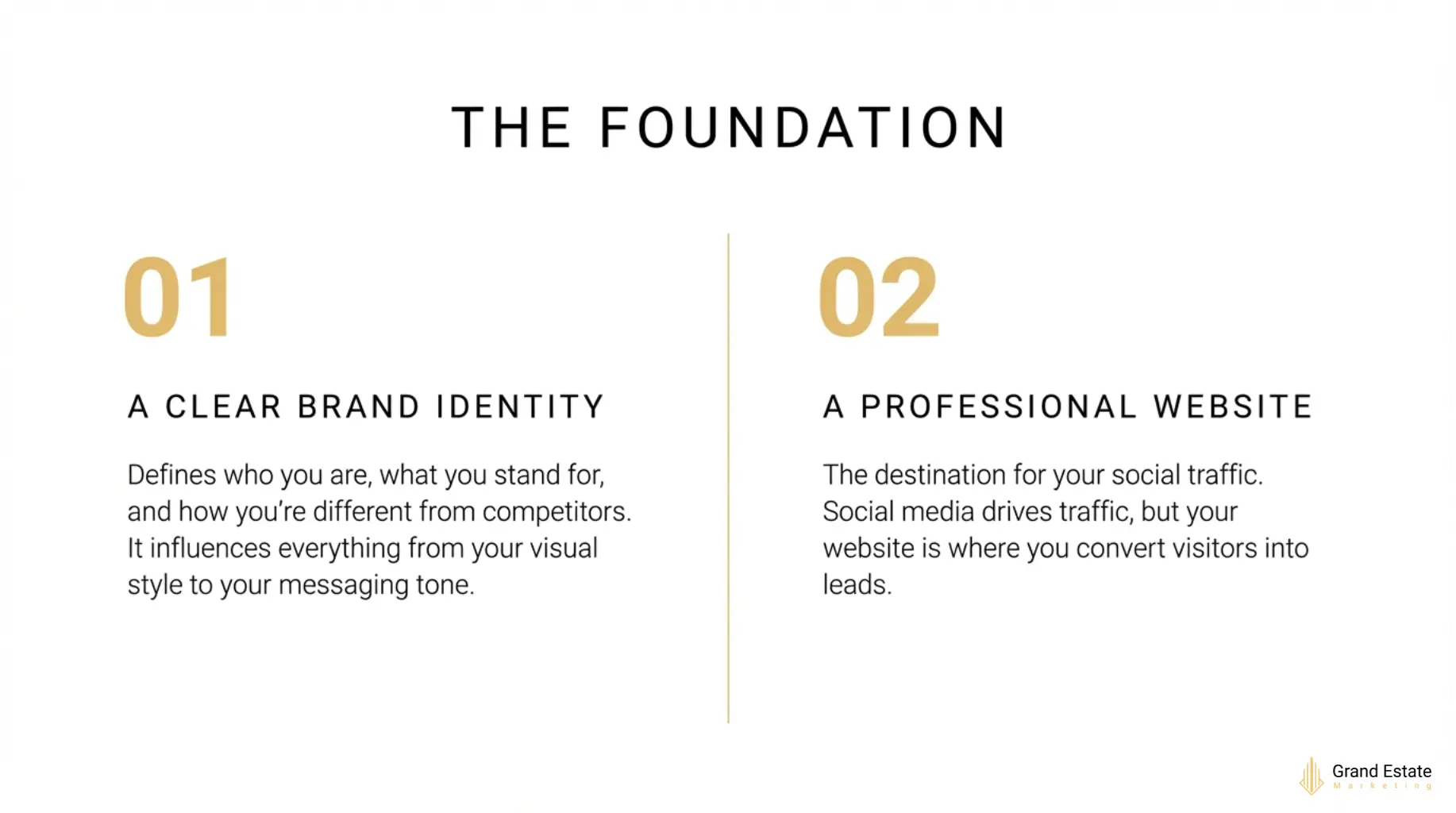
You can't build a successful social media presence without the right groundwork. Two things need to be in place first:
A clear brand identity. This defines who you are as an agent or brokerage, what you stand for, and how you're different from competitors. Your brand identity influences everything from your visual style to your messaging tone.
A professional website. Social media drives traffic, but your website converts visitors into leads. You need a place where people can browse listings, learn about your services, and submit their contact information.
We've created separate in-depth guides for developing your brand identity and building an effective real estate website. Get those foundations solid before diving into social media.
Choosing the Right Platforms
Not every platform deserves your attention. Focus your energy where your target audience actually spends time.
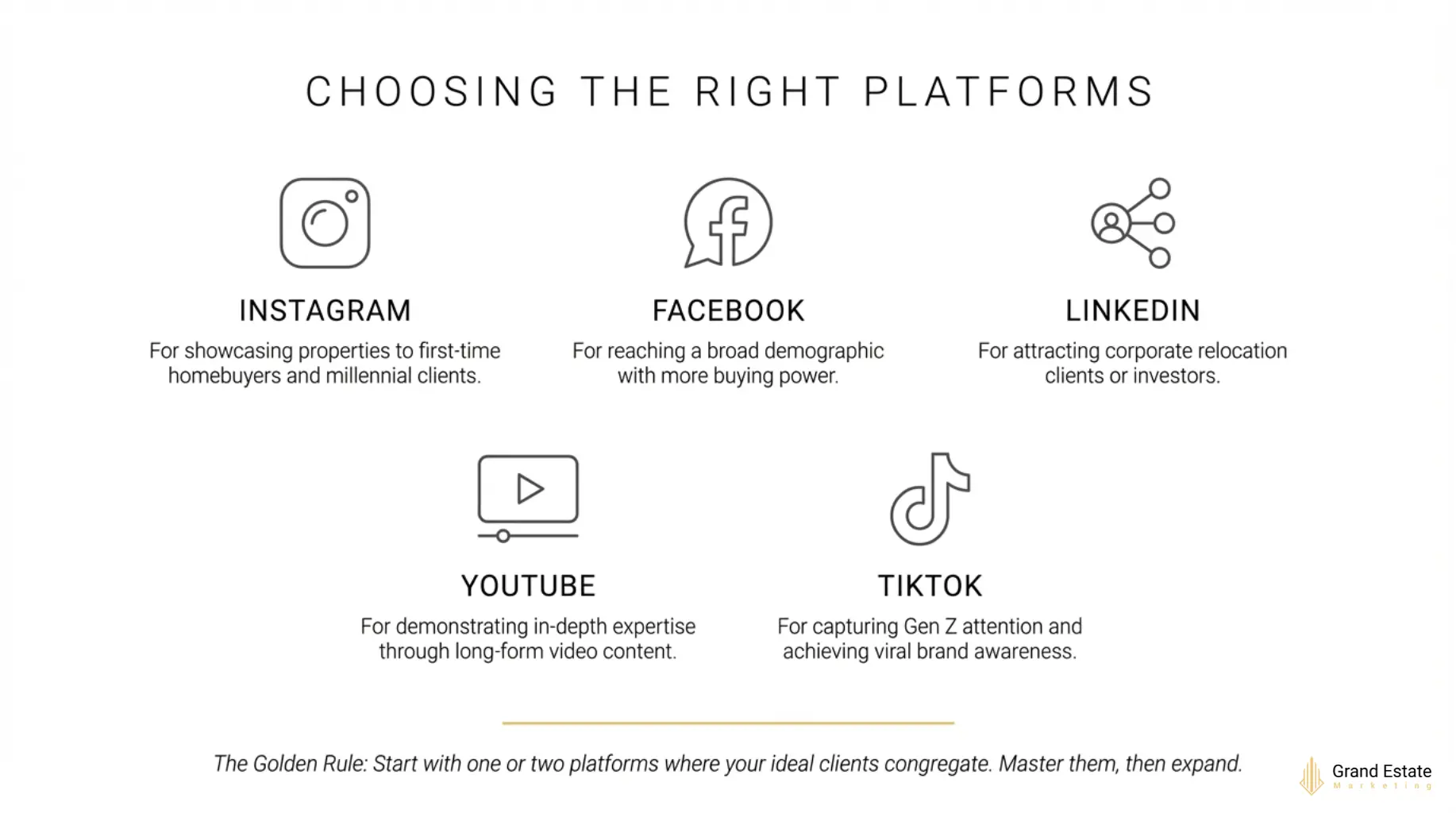
Instagram works well for showcasing properties through photos and short videos. The platform skews younger, making it ideal if you work with first-time homebuyers or millennial clients.
Facebook reaches a broader demographic and offers powerful community-building tools through groups. The platform's older user base often has more buying power and immediate purchasing intent.
LinkedIn positions you as a professional resource. Use it to connect with other industry professionals, share market insights, and attract corporate relocation clients or investors.
YouTube lets you create long-form video content that demonstrates your expertise. Virtual tours, neighborhood guides, and market updates perform particularly well.
TikTok captures attention from Gen Z and younger millennials. Short, entertaining videos about the buying process or property features can go viral and dramatically expand your reach.
Start with one or two platforms where your ideal clients congregate. You can always expand later once you've established a consistent presence.
Create & Optimize Your Profiles
Your profile serves as your digital business card. Make it count.
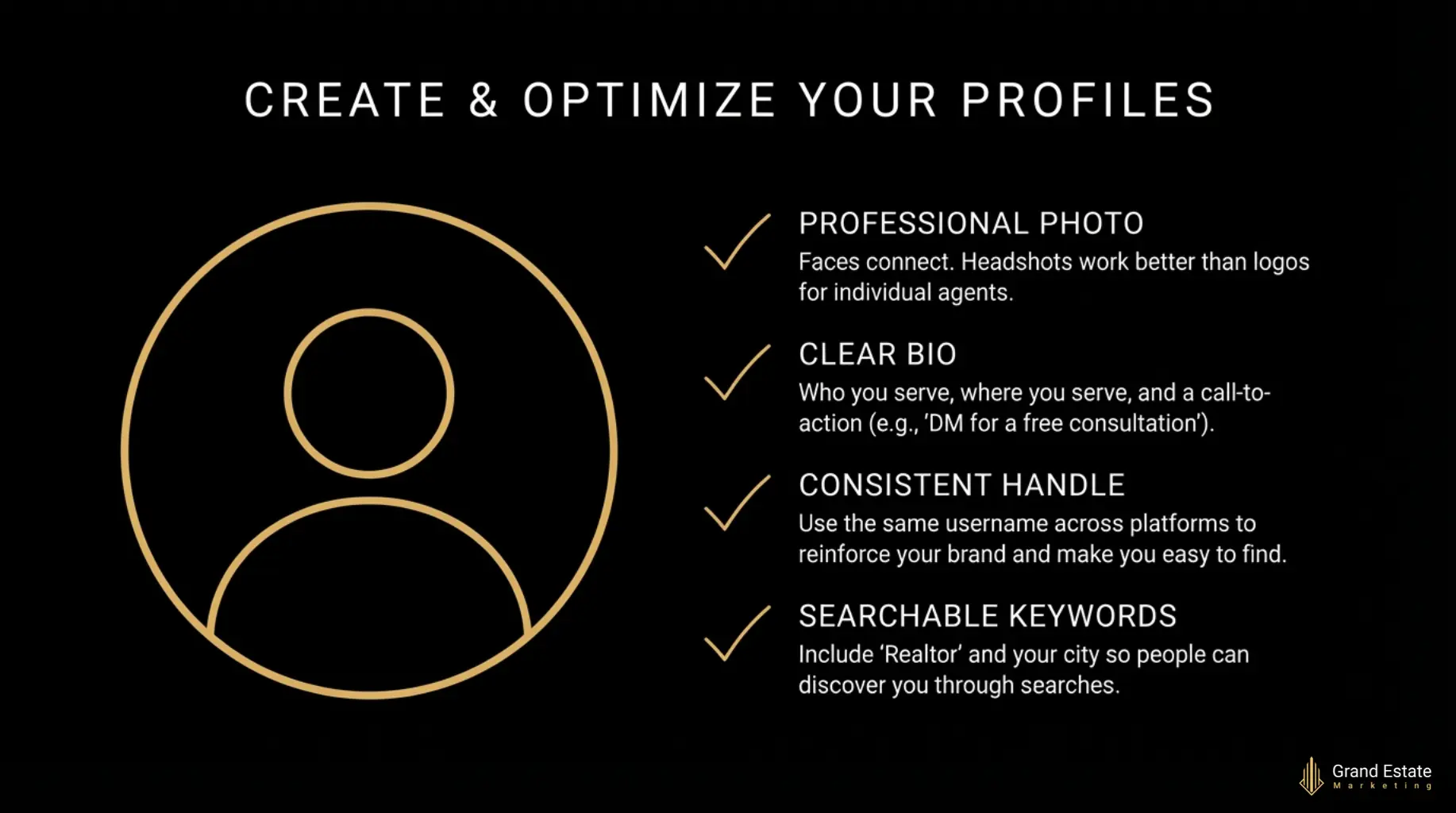
Use a professional photo. Headshots work better than logos for individual agents. People connect with faces, not brands.
Write a clear bio. Include what you do, where you serve, and how people can contact you. Something like: "Helping families find their dream homes in Austin | 10+ years experience | DM for a free consultation".
Include contact information. Make it easy for potential leads to reach you. Add your phone number, email, and website link.
Choose a consistent username. Use the same handle across platforms when possible. This makes you easier to find and reinforces your brand.
Add relevant keywords. Include terms like "real estate agent," "realtor," and your city name so people can discover you through searches.
Content Pillars
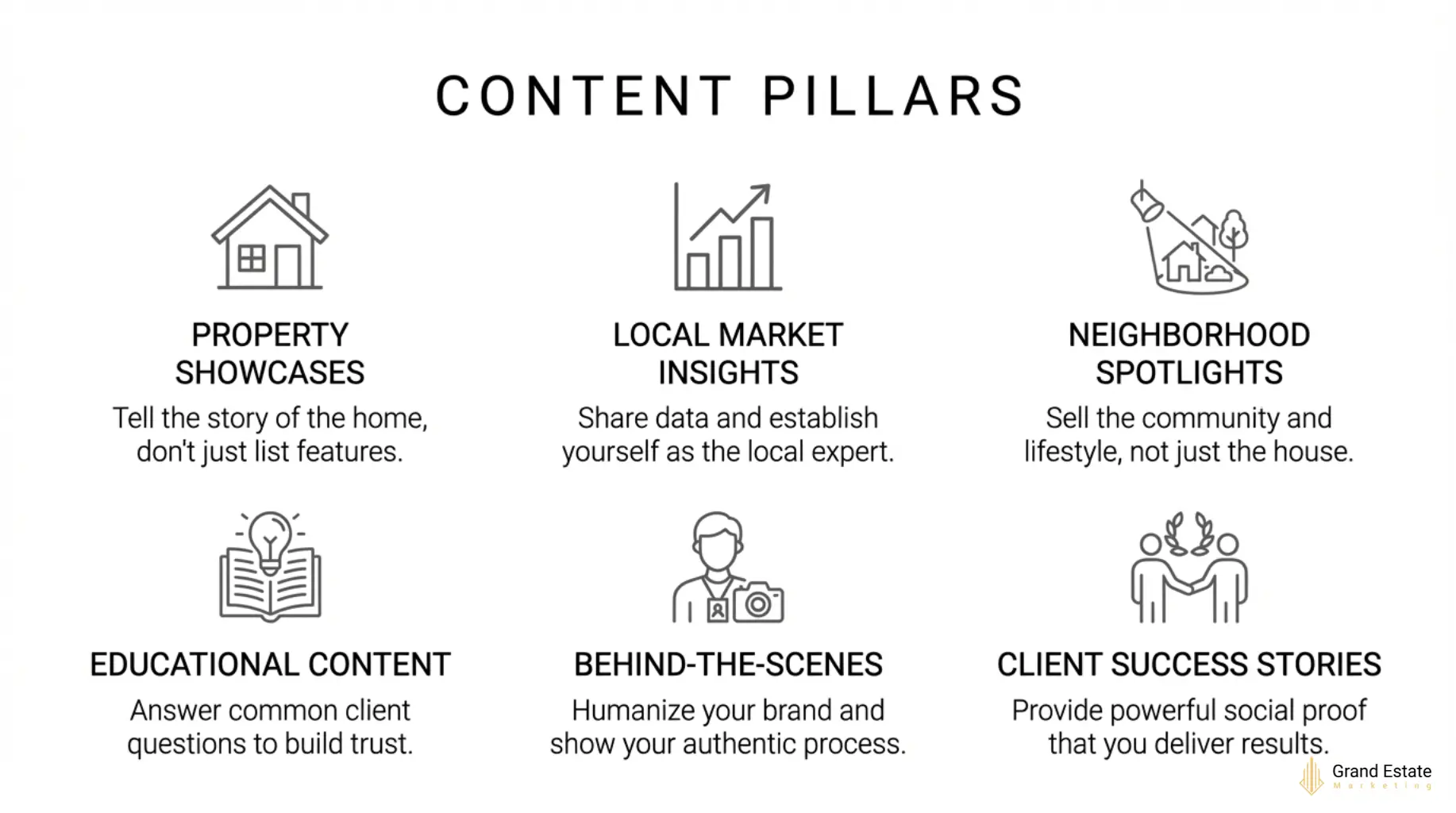
Your real estate social media strategy needs variety. Posting only listings makes your feed look like a classified ad section. Instead, organize your content around these pillars:
Property Showcases
Yes, you should feature listings. Just make them compelling. Highlight unique features, use professional photography, and tell the story of each home. Include key details like price, bedrooms, bathrooms, and square footage.
Video walkthroughs outperform static photos. Even a simple smartphone video tour generates more engagement than a carousel of images.
Local Market Insights
Share data about your area. What's the average home price? How long are properties staying on the market? Are interest rates affecting buyer behavior?
Present this information in digestible formats. Create simple graphics, short video updates, or carousel posts that break down complex topics.
Neighborhood Spotlights
Buyers don't just purchase homes. They invest in communities. Feature local businesses, parks, schools, and events. Show what makes each neighborhood special.
This content also helps you build relationships with local business owners who might refer clients your way.
Educational Content
The buying and selling process confuses people. Answer common questions like "How much should I save for a down payment?" or "What happens during a home inspection?"
Educational content positions you as a helpful resource rather than just a salesperson. People remember agents who taught them something valuable.
Behind-the-Scenes
Let people see the human side of your business. Share glimpses of your daily routine, celebrate milestones with clients (with their permission), or document the process of staging a home.
Authenticity builds trust. When people feel like they know you, they're more likely to reach out when they're ready to buy or sell.
Client Success Stories
Testimonials and success stories provide social proof. Share photos from closing days, positive reviews, or brief client interviews about their experience working with you.
Always get written permission before featuring clients on your social media accounts.
Prioritize Video Content
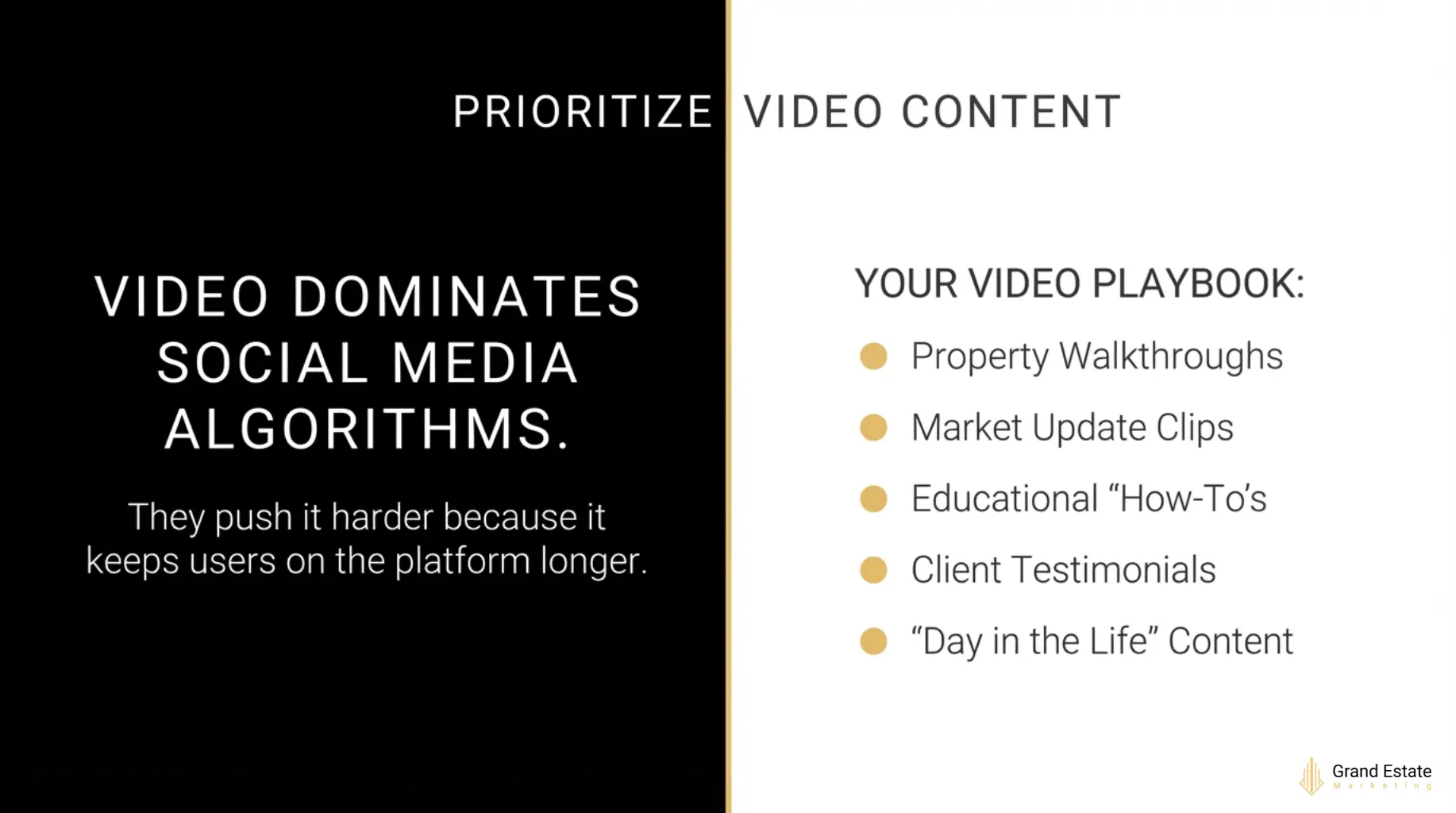
Video dominates social media algorithms. Platforms push video content harder than static posts because it keeps users on the platform longer.
Property tours should be your foundation. Walk through homes, pointing out features and answering common questions as if you're giving an in-person showing.
Market update videos establish your expertise. Record short clips discussing recent sales, price trends, or changes in inventory.
Educational tutorials help first-time buyers and sellers understand complex processes. Break down topics like "Reading a Comparative Market Analysis" or "What to Expect at Closing."
Client testimonials on video carry more weight than written reviews. A 30-second clip of a happy client talking about their experience builds tremendous credibility.
Day-in-the-life content humanizes your brand. Show what a typical day looks like, from morning coffee to evening showings.
Keep videos short and front-load important information. Most people scroll quickly, so grab attention in the first three seconds.
Build A Community
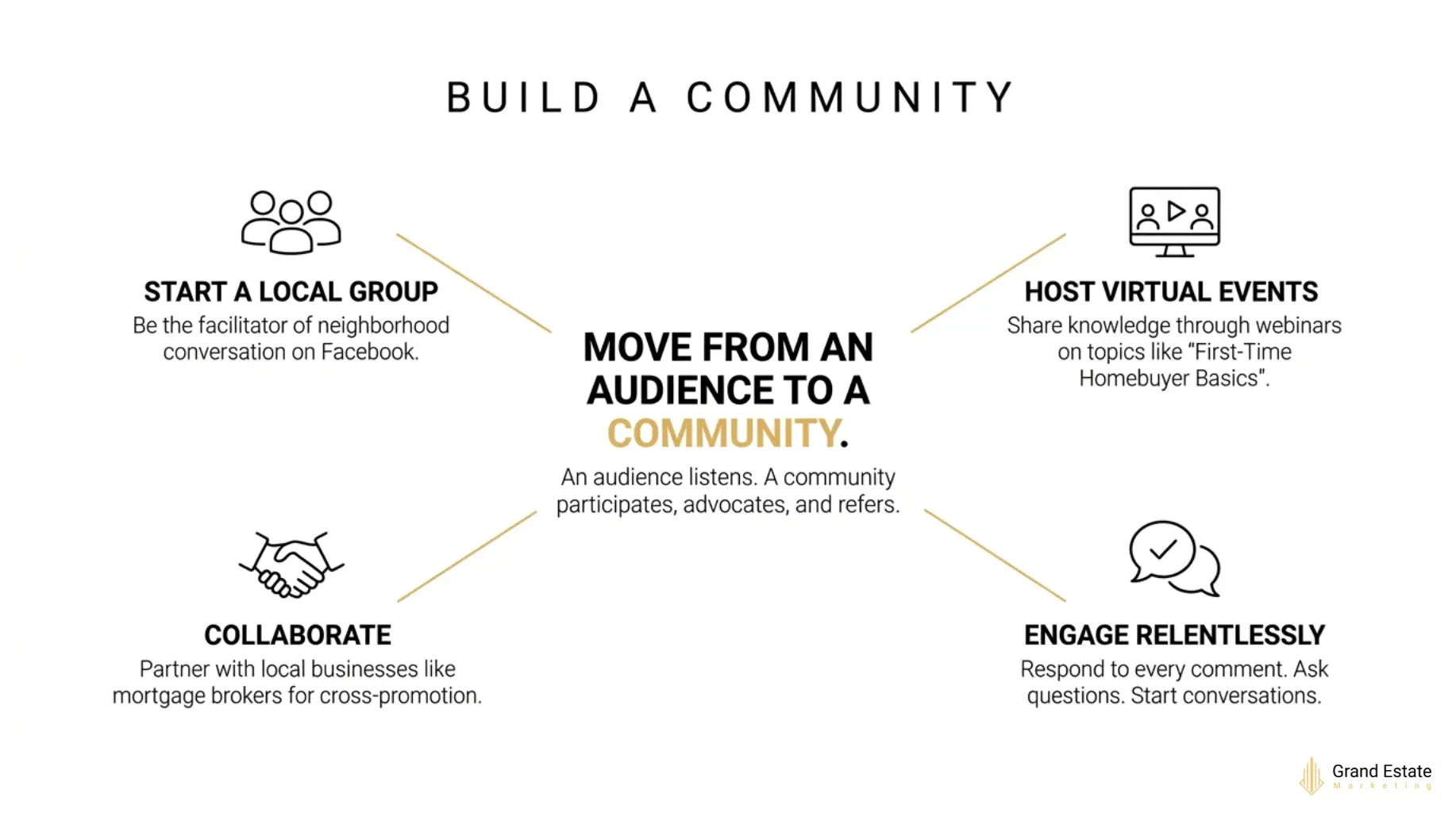
The strongest real estate social media strategies create communities, not just audiences.
Start a local Facebook group. Create a space for neighborhood residents to share recommendations, ask questions, and discuss community issues. Position yourself as the facilitator rather than constantly promoting your services.
Host virtual events. Organize online webinars about topics like "First-Time Homebuyer Basics" or "Preparing Your Home for Sale." Promote them on social media and collect registrations through your website.
Create a branded hashtag. Encourage clients to use a specific hashtag when posting about their home buying or selling experience. This generates organic word-of-mouth marketing.
Collaborate with local businesses. Partner with mortgage brokers, home inspectors, interior designers, or moving companies for joint content. Cross-promotion expands both of your reaches.
Feature community members. Interview local business owners, spotlight volunteers, or share stories about long-time residents. People love seeing their neighbors featured, and it reinforces your connection to the community.
Create a Content Calendar
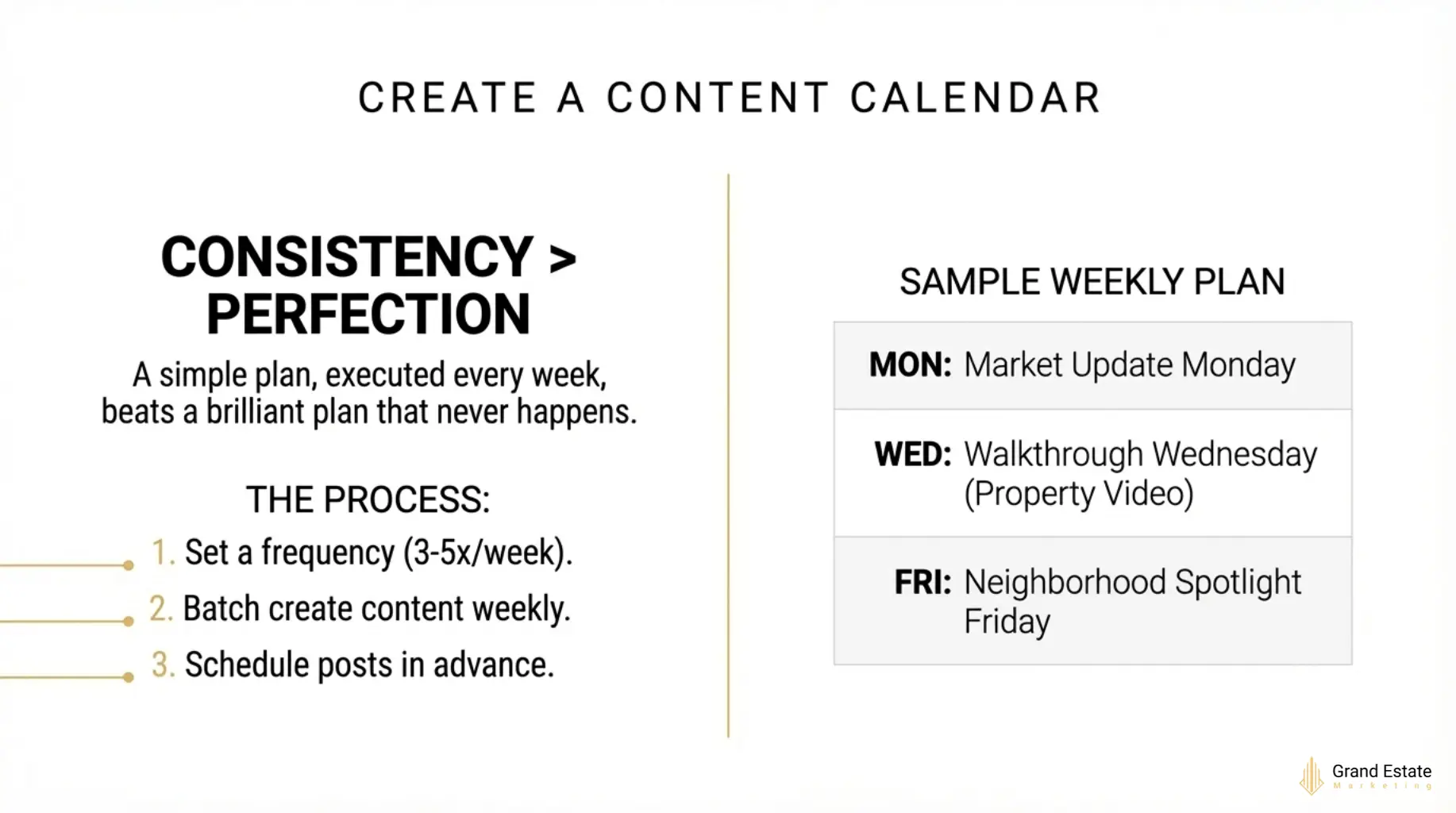
Consistency matters more than perfection. A content calendar keeps you organized and ensures you're posting regularly.
Decide on a posting frequency. Three to five times per week works well for most agents. Quality beats quantity, so don't sacrifice good content just to hit a daily posting goal.
Plan content themes by day. For example: Monday market updates, Wednesday property features, Friday neighborhood spotlights. This structure makes content creation more manageable.
Batch create content. Set aside time each week to create multiple posts at once. Take photos, write captions, and schedule everything in advance using tools like Meta Business Suite, Later, or Hootsuite.
Leave room for spontaneous posts. If you close on an exciting property or something timely happens in your market, you should be able to share it immediately.
Review and adjust monthly. Look at which content performed best and create more of what resonates with your audience.
Measuring Your Results
Track metrics to understand what's working and what needs adjustment.
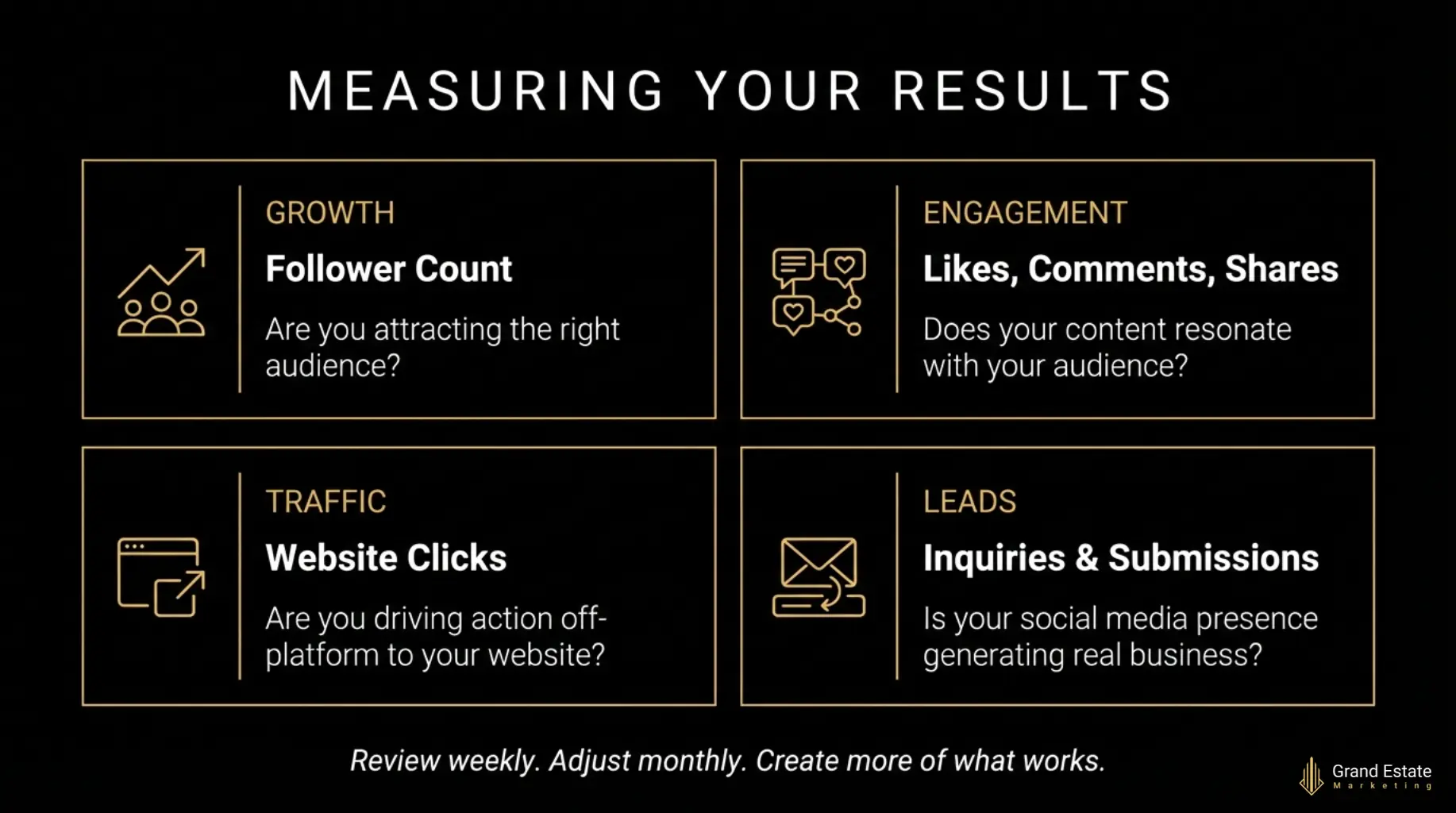
Follower growth shows whether your content attracts new potential clients. Steady growth indicates you're reaching the right audience.
Engagement rate (likes, comments, shares divided by follower count) reveals how much your audience cares about your content. Higher engagement means your content resonates.
Website traffic from social media tells you if your posts drive people to take the next step. Use Google Analytics to see which platforms send the most visitors.
Lead generation is the ultimate metric. Track how many inquiries, consultation requests, or contact form submissions come from social media.
Content performance helps you identify patterns. Note which posts get the most saves, shares, or comments. Create more content in those formats or on those topics.
Most platforms offer built-in analytics tools. Check them weekly to spot trends and monthly to assess overall performance.
Common Mistakes to Avoid
Even experienced agents stumble with social media. Watch out for these pitfalls:
Posting inconsistently. Disappearing for weeks then flooding feeds with content hurts your visibility. Algorithms favor accounts that post regularly.
Being too salesy. Every post shouldn't be a pitch. Follow the 80/20 rule: 80% valuable or entertaining content, 20% promotional.
Ignoring comments and messages. Social media is about conversation. Ignoring engagement damages relationships and signals to algorithms that your content doesn't matter.
Using poor quality visuals. Blurry photos and shaky videos make you look unprofessional. Invest in decent equipment or hire a photographer for important content.
Neglecting captions. Great visuals attract attention, but captions provide context and encourage engagement. Write thoughtful captions that add value.
Forgetting to include calls-to-action. Tell people what you want them to do next. Visit your website, send a message, save the post, or share with a friend.
Staying Compliant
Real estate comes with regulations that extend to social media.
Include required disclosures. Your brokerage name, license number, and equal housing opportunity logo may need to appear on posts featuring listings.
Get permission before sharing client information. Photos, names, addresses, and details about transactions are private unless clients explicitly consent to sharing.
Follow fair housing laws. Never target or exclude people based on protected characteristics. Be mindful of language that could be interpreted as discriminatory.
Respect copyrights. Don't use music, photos, or graphics you don't have rights to. Stick to royalty-free resources or content you've created yourself.
Be honest in your marketing. Don't exaggerate property features, misrepresent your experience, or make claims you can't back up.
Consult your brokerage's social media policy and review guidelines from the National Association of Realtors to ensure compliance.
Making Your Strategy Work Long-Term
A real estate social media strategy isn't a one-time project. It requires ongoing effort and adaptation.
Stay current with platform changes. Social media algorithms and features evolve constantly. What works today might need adjustment tomorrow.
Invest in learning. Take courses, attend webinars, or follow social media experts who share tactics and trends. The more you know, the better results you'll get.
Repurpose your best content. Turn a popular Instagram post into a YouTube video or expand a Twitter thread into a blog post. Maximize the value of every piece of content you create.
Build systems and processes. Create templates for graphics, develop caption formulas, and establish workflows that make content creation more efficient.
Stay authentic. Trends come and go, but authenticity always wins. Let your personality shine through, share genuine experiences, and focus on providing real value to your audience.
Your real estate social media strategy connects you with potential clients, builds your reputation, and grows your business.
Start with the foundations, choose the right platforms, create valuable content consistently, and engage meaningfully with your community.
Results won't happen overnight, but with patience and persistence, you'll build a powerful online presence that generates leads for years to come.
Need Help From Marketers?
Building a winning real estate social media strategy takes time and expertise. If you want results faster without the trial and error, we can help. Our team specializes in real estate marketing that generates leads for real estate brands across North America.
Get a free consultation to discover how we can transform your online presence and fill your pipeline with qualified buyers and sellers.