

You've probably heard it before: Google Ads can transform your real estate business. But most agents jump in without a strategy, burn through their budget in weeks, and walk away thinking paid advertising doesn't work.
The reality?
A well-executed real estate Google Ads strategy can become your most reliable source of qualified leads. You just need to know what you're doing.
Why Google Ads Works for Real Estate
Think about how people search for homes today. When someone types "3 bedroom house for sale in Denver" into Google, they're likely actively looking to buy or sell. That's buyer intent at its finest.
Google Ads puts your listings directly in front of these motivated prospects at the exact moment they're searching. Unlike social media ads where you're interrupting someone's scroll, you're answering a question they're already asking.
Here's what makes Google Ads particularly powerful for real estate:
Immediate visibility. You don't need to wait months for SEO to kick in. Your ads can start appearing within hours of launching your campaign.
Precise targeting. You can target specific neighborhoods, property types, and price ranges. Want to focus exclusively on luxury condos in downtown Miami? You can do that.
Measurable results. Every click, call, and form submission is tracked. You'll know exactly which keywords and ads are bringing in leads and which ones are wasting your money.
Scalability. Once you find a winning formula, you can increase your budget and expand to new areas with confidence.
How Do Google Ads Work?
Before we get into strategy, let's cover the basics. Google Ads operates on a pay-per-click model. You bid on keywords related to your services, and when someone searches for those terms, your ad appears in the search results.
You only pay when someone actually clicks on your ad. The amount you pay per click depends on how competitive the keyword is and the quality of your ad and landing page.
Google uses an auction system, but it's not just about who bids the highest. The platform rewards advertisers who create relevant, high-quality ads that match what searchers are looking for. This is called Quality Score, and it directly impacts how much you pay and where your ads appear.
Setting Realistic Expectations
Let's be clear about something upfront. This isn't a get-rich-quick scheme. Running successful Google Ads campaigns requires research, planning, testing, and ongoing optimization. You could easily waste thousands of dollars if you don't know what you're doing.
On the flip side, when done right, Google Ads can be incredibly profitable.
Budget requirements matter. You should be prepared to spend at least $500 to $1,000 per month to see meaningful results. Anything less and you won't generate enough data for Google to optimize your campaigns effectively. If that kind of budget would significantly impact your finances, it's better to wait until you're ready.
Results take time. Google's algorithm needs data to learn what works. Expect to spend the first few weeks in a learning phase where performance might be inconsistent. Don't panic and start making drastic changes during this period.
Running ads is at your own risk. Everything we're sharing here is based on our experience running real estate campaigns. Results depend on your market, competition, and execution. Do your own research and proceed at your own risk.
Your Complete Real Estate Google Ads Strategy
Now let's get into the practical steps you need to follow to build a successful campaign.

1. Set Up Your Google Ads Account
First things first. You need to create your Google Ads account if you don't already have one. Head to ads.google.com and follow the setup process.
Set up billing. Add your payment information so Google can charge you for clicks. You can set daily budget limits to control spending.
Configure conversion tracking. This is critical and often overlooked. You need to connect your website to Google Ads so you can track what happens after someone clicks your ad. Did they fill out a contact form? Did they call you? Without this data, you're flying blind.
If you're using a CRM (which you absolutely should be), connect it to your website and Google Ads. This creates a complete picture of your lead journey from initial click to closed deal.
Don't have a CRM yet?
Consider platforms like FollowUp Boss, HubSpot, or Pipedrive.
They make managing inquiries and following up with prospects infinitely easier. When your CRM connects to your website, leads automatically flow in with details about where they came from and which pages they visited.
2. Keyword Research
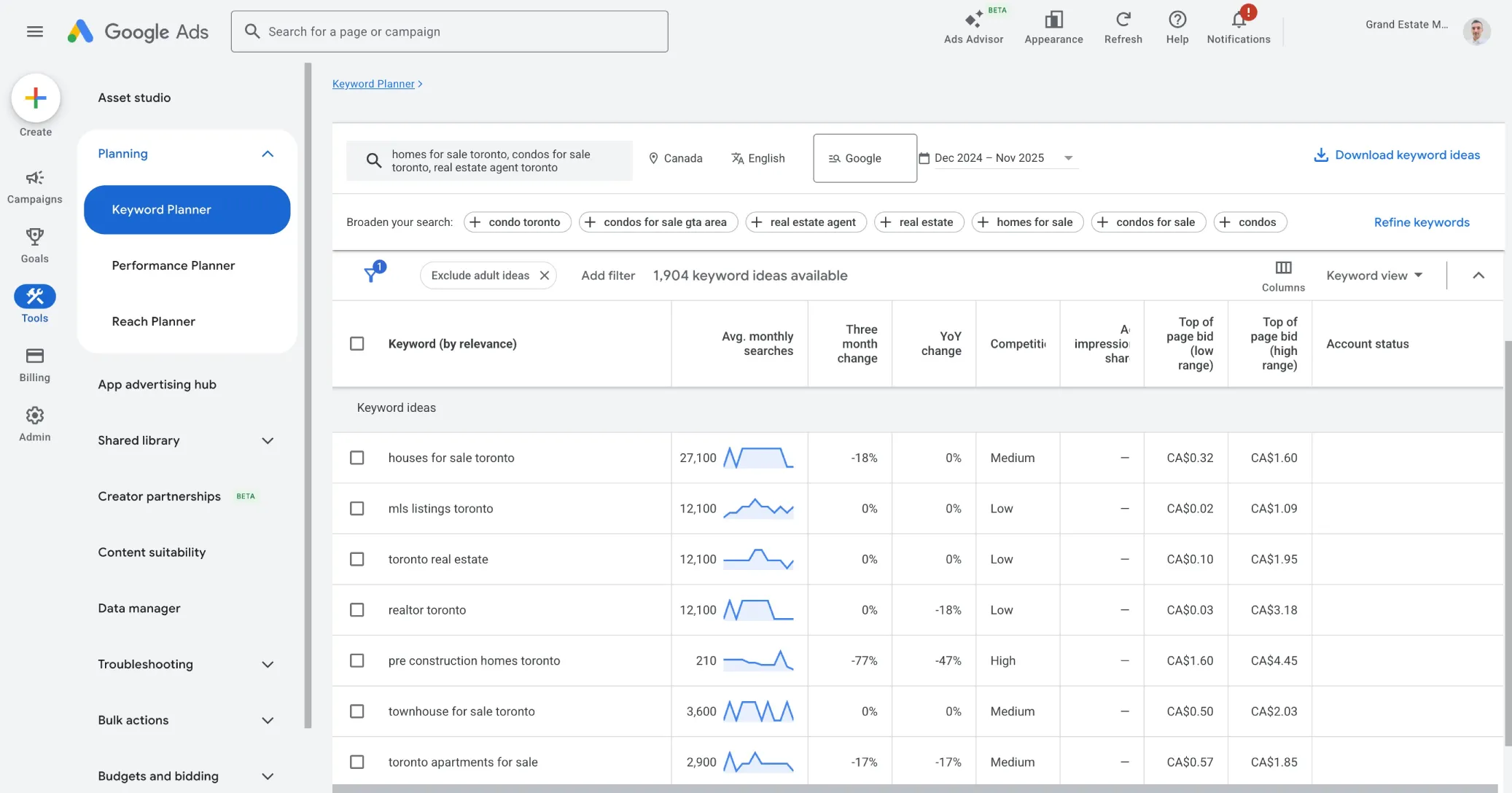
Keywords are the foundation of your entire campaign. Choose the wrong ones and you'll attract tire-kickers and bargain hunters. Choose the right ones and you'll connect with serious buyers and sellers.
Finding your keywords starts with understanding how people search. Begin with Google's auto-suggest feature. Start typing real estate-related terms and see what suggestions appear. These are actual searches people are making.
Use tools like Ahrefs' Free SEO Tools or Google Keyword Planner to discover related terms and get search volume data. Look for keywords with commercial intent, meaning the searcher is ready to take action.
Verify search intent before committing to any keyword. Just because a keyword gets searches doesn't mean it's right for you. Type it into Google yourself and look at what appears. Are the results similar to what you're offering? If Google shows mostly informational content when you're trying to sell homes, that's a mismatch.
The best-performing types of landing page for real estate Google Ads include:
- [Property Type] For Sale In [City/Neighborhood]
- [Property Type] For Sale Under [Price] In [City/Neighborhood]
- Sell Your Home in [City]
- First-Time Buyer Homes in [City]
- Realtor / Real Estate Agent in [City/Neighborhood]
Each of these targets a specific search intent and audience segment.
3. Build High-Converting Landing Pages
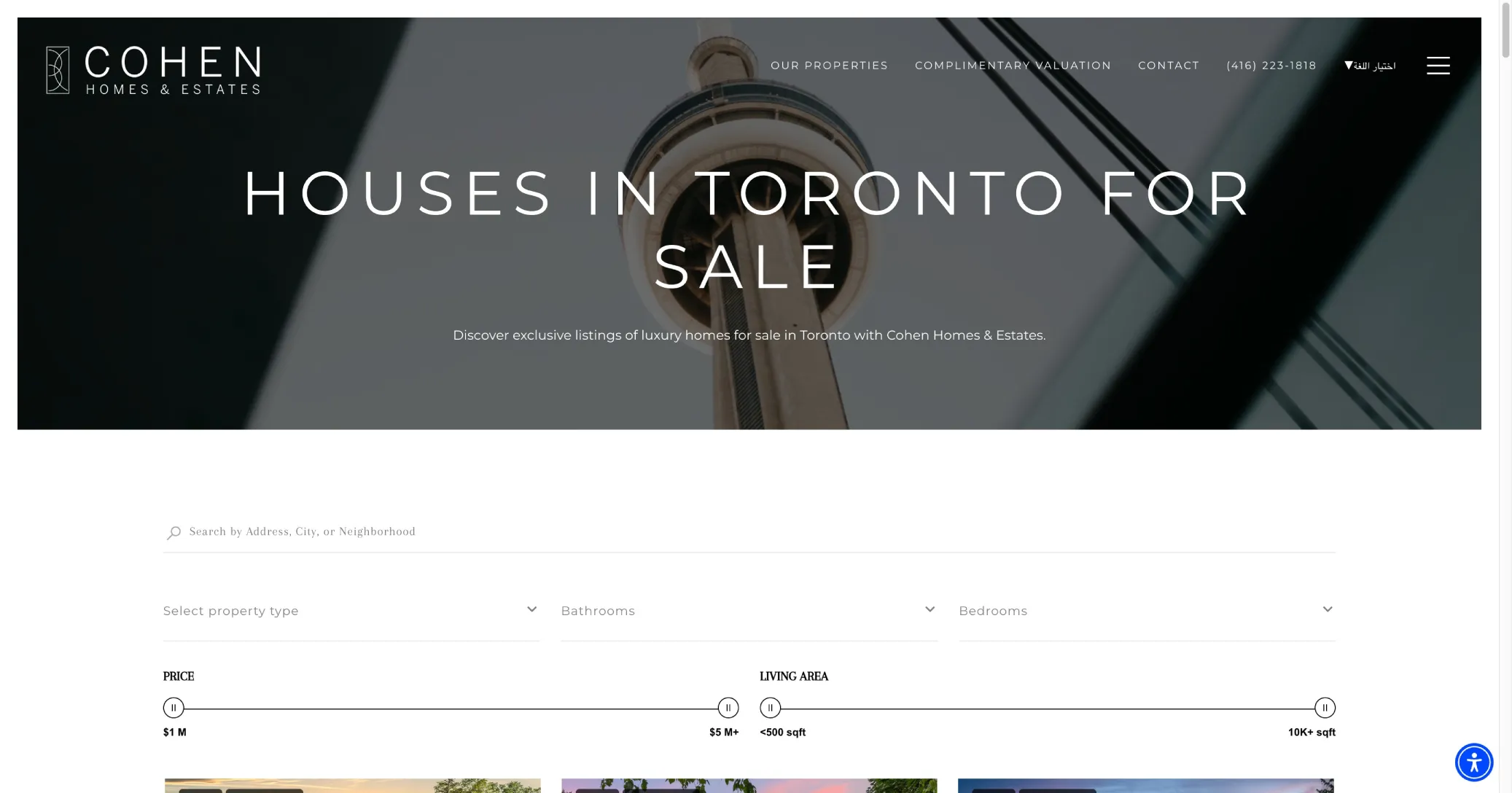
Many real estate agents send all their Google Ads traffic to their homepage.
Don't do this.
Your homepage tries to do too much. It talks about buying, selling, your bio, your team, your awards. A searcher looking for condos in Boston doesn't want to wade through all that. They want to see condos in Boston.
Create dedicated landing pages that match each keyword theme you're targeting. One keyword focus per landing page.
Essential elements your landing pages must include:
- Match the search intent. If your ad promises "luxury waterfront homes," your landing page better show luxury waterfront homes immediately.
- Location-specific relevance. Feature the neighborhood or city prominently. Include local imagery and references that prove you know the area.
- A clear value proposition. Answer the question: why should they choose you? What makes you different from the 47 other agents advertising on Google?
- One primary call to action. Don't give visitors decision paralysis. What's the one thing you want them to do? Schedule a showing? Request a market analysis? Make it obvious and easy.
- High-quality design and visuals. Professional photography matters. Your landing page is often someone's first impression of your business.
- Trust signals. Display reviews, testimonials, awards, and media mentions. Social proof reduces hesitation.
- Fast loading speeds. If your page takes more than three seconds to load, you're losing leads. Period.
- Mobile optimization. Over 60% of searches happen on mobile devices. If your page looks broken on a phone, you're throwing money away.
If you don't have optimized landing pages you can check out our post on how to build a real estate website or you can hire a real estate marketing professionals to build you a website.
4. Create A Campaign
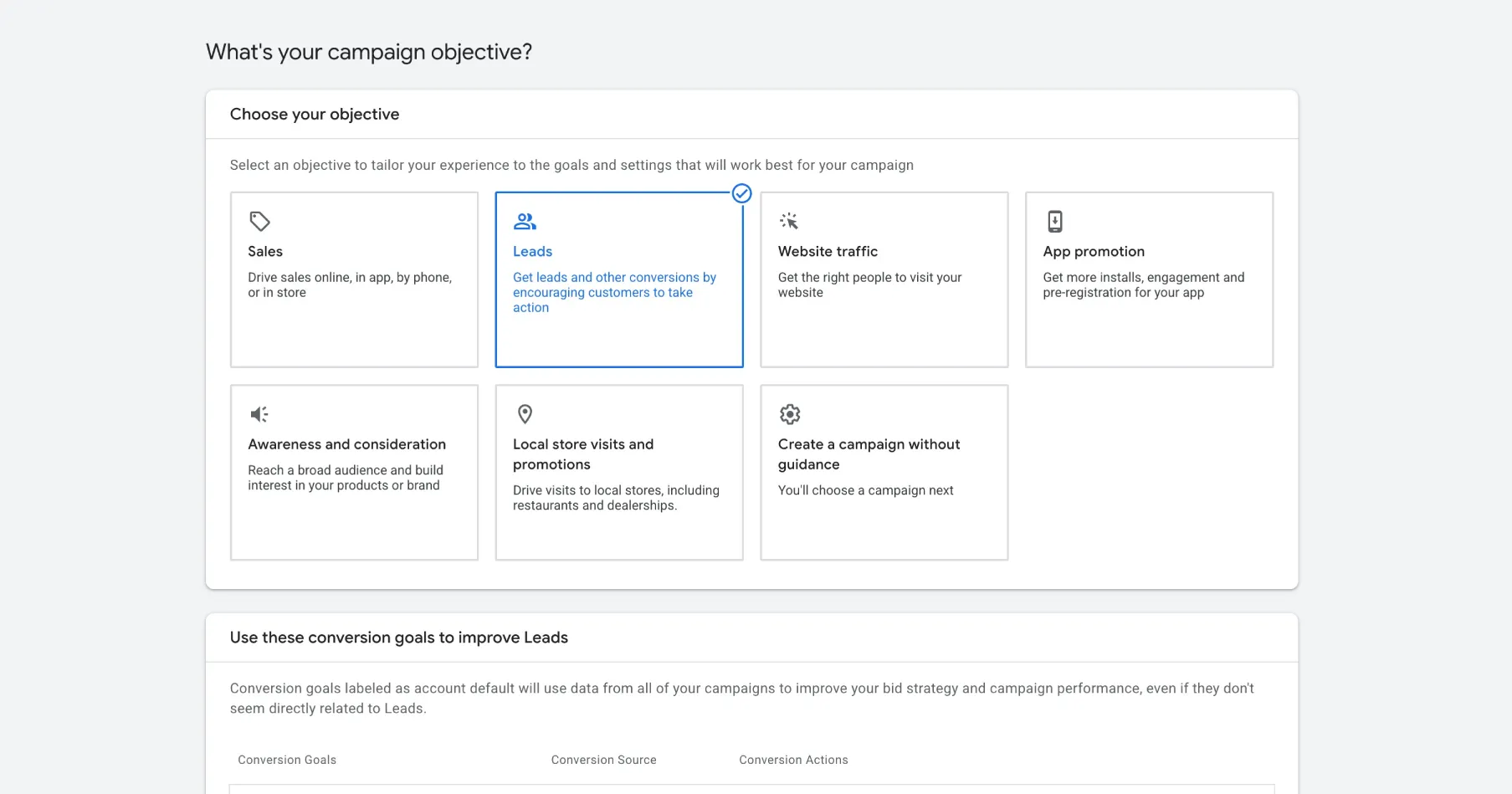
When you're ready to build your first campaign, select the Search Campaign type with "Leads" as your goal. This tells Google you want conversions, not just traffic.
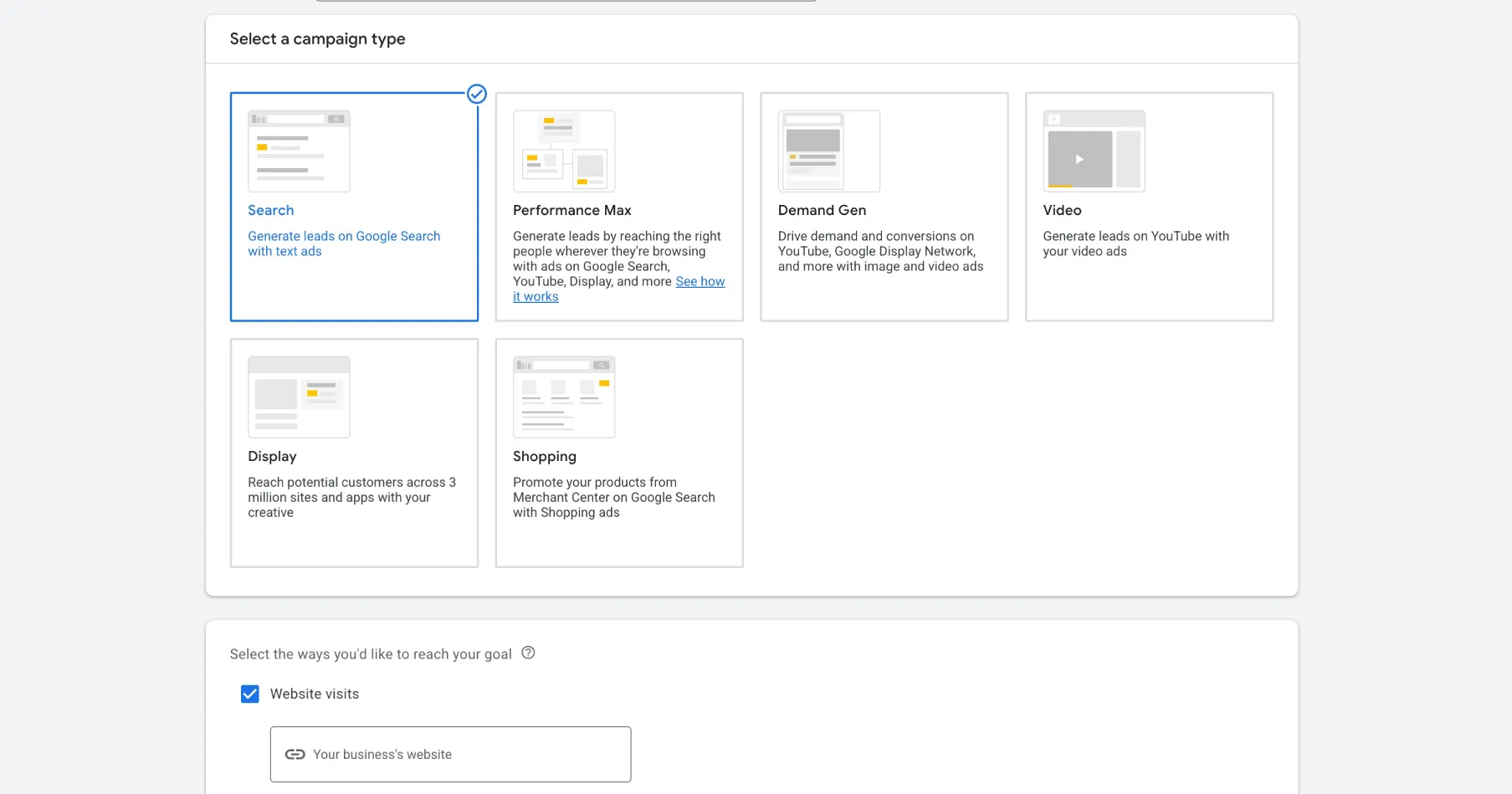
Set the campaign type to Search. We only want to show our ads in the search results, not anywhere else, especially if we have a limited budget. Then check Website visits (don't paste URL yet).
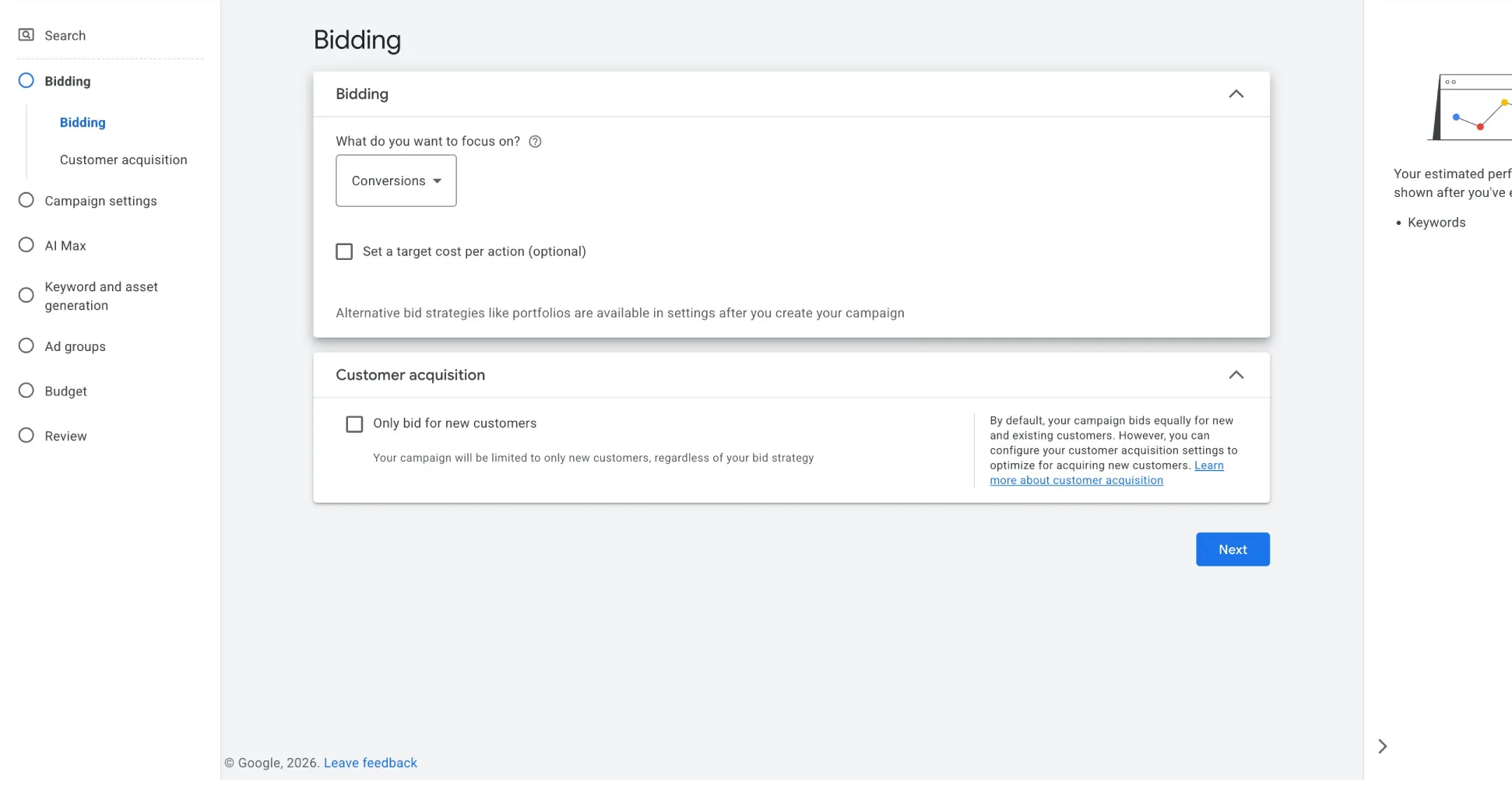
Set your bidding strategy to focus on conversions. This allows Google's algorithm to automatically adjust your bids to maximize lead generation within your budget.
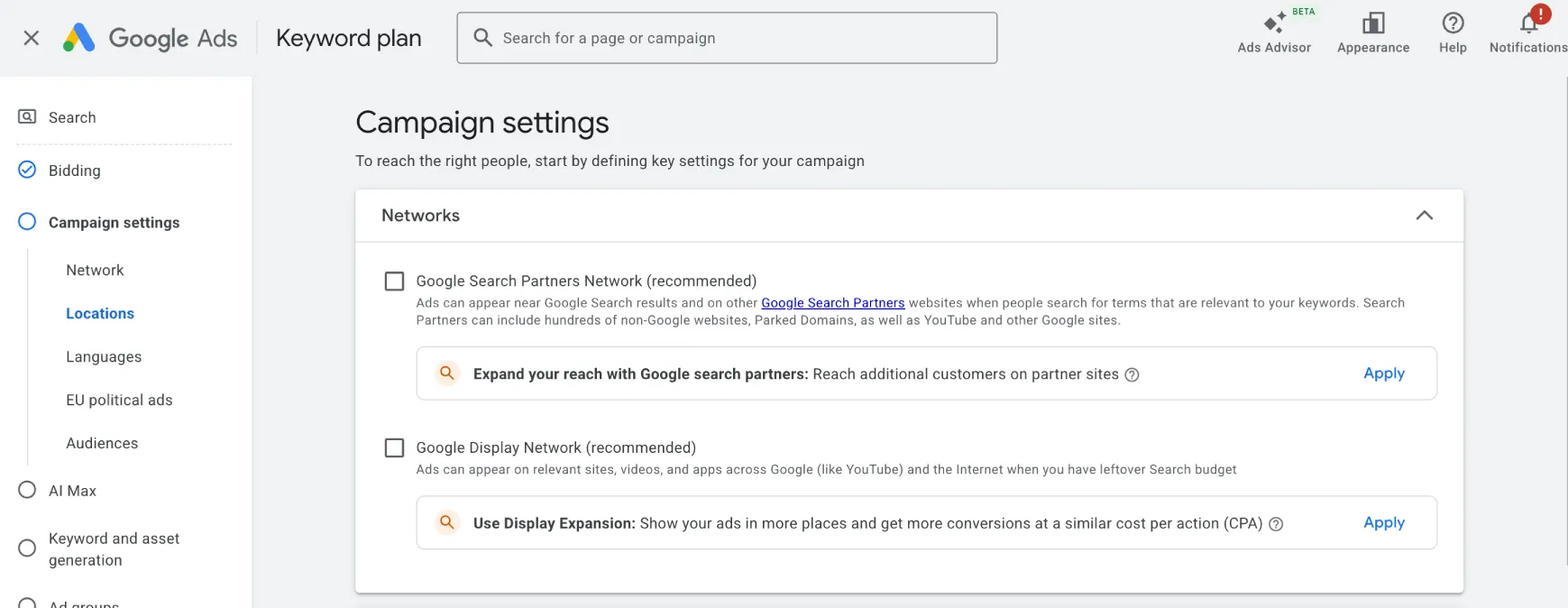
Uncheck the display and search partner networks. At least initially. These can work well later, but when you're starting out, you want to focus on pure Google search traffic where intent is highest.
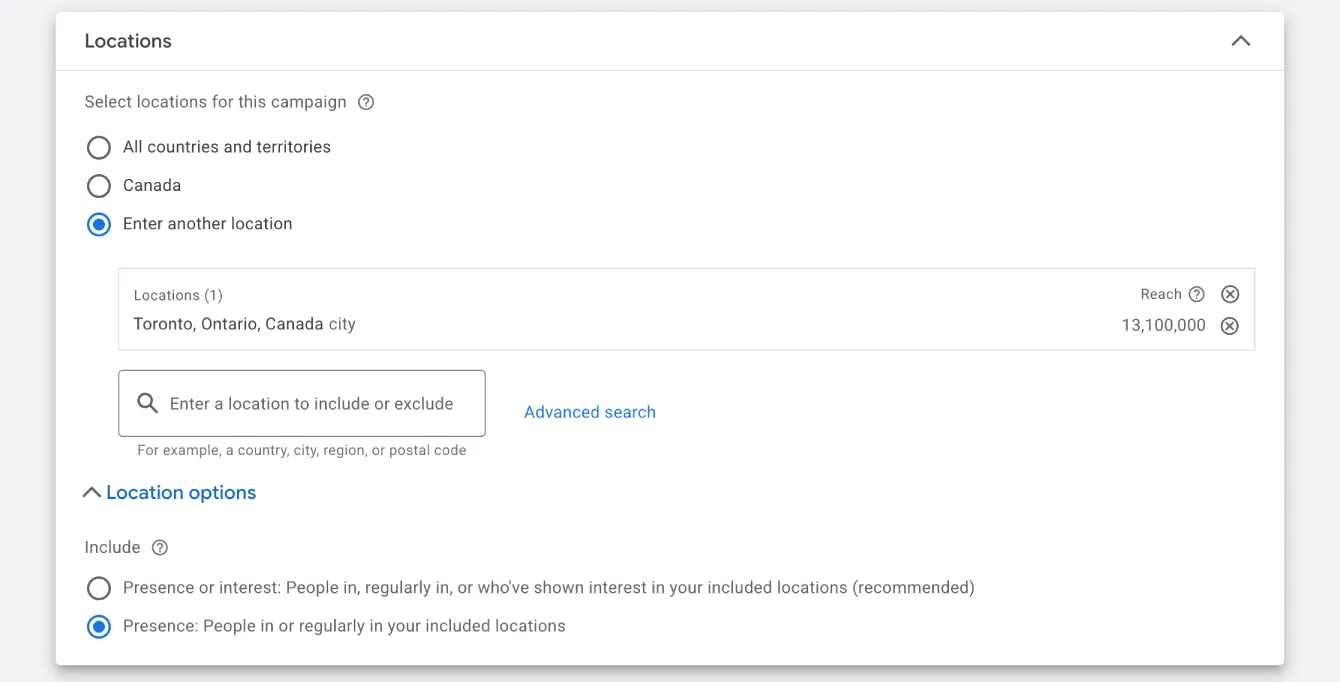
Set your location targeting carefully. If you serve a specific city, target that city. If you work within a certain radius of your office, use radius targeting. Don't waste money advertising to people you can't serve.
Create one campaign per location. Don't mix New York City and New Jersey in the same campaign. Keep them separate so you can control budgets and track performance independently.
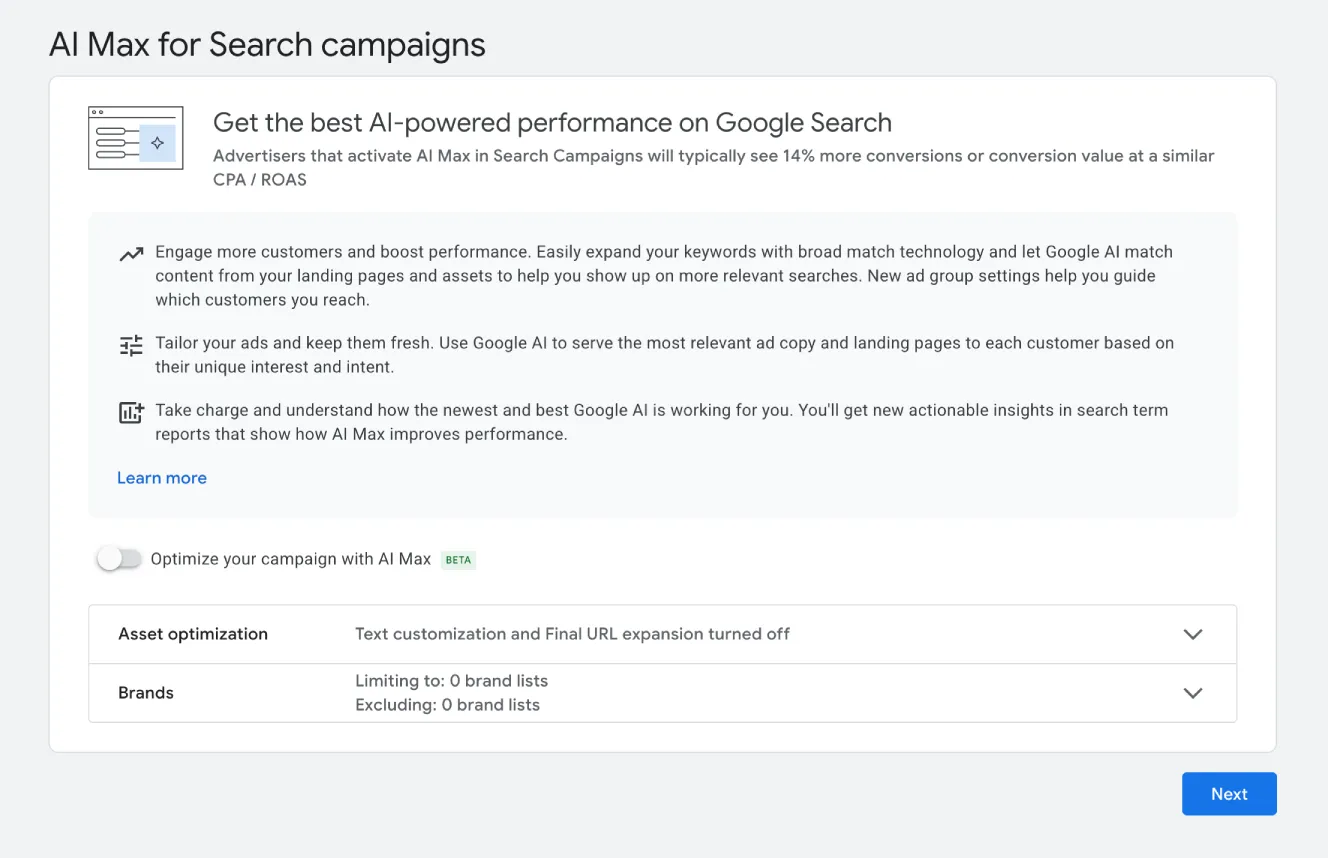
Uncheck AI Max settings during initial setup. You want more control over your campaigns in the beginning while you're learning what works.
5. Structure Your Ad Groups Strategically
Ad groups organize your keywords and ads within a campaign. Proper structure is crucial for performance and budget control.
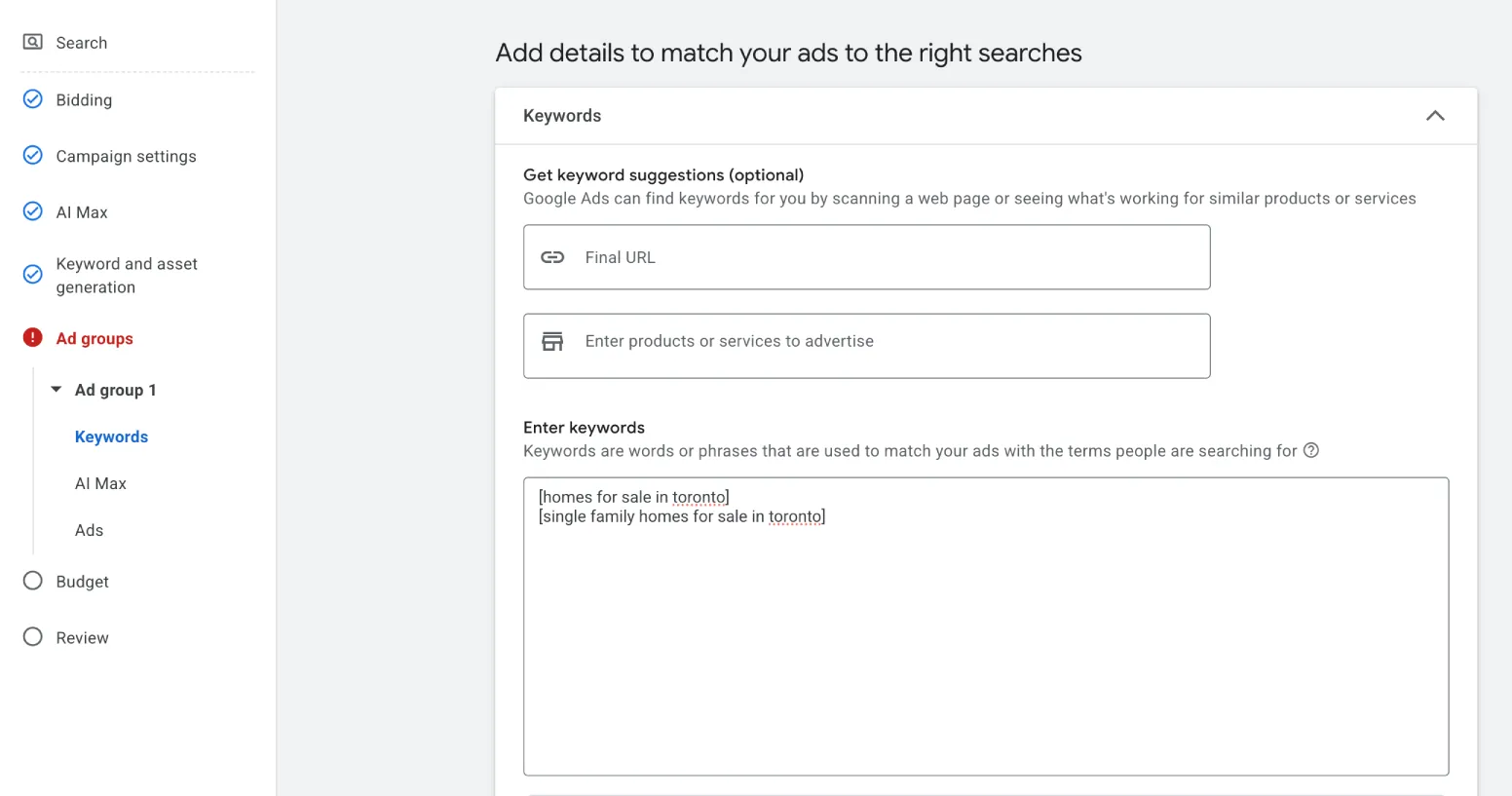
Understanding keyword match types is essential. Google offers three match types:
- Broad match triggers your ads for related searches, including synonyms and variations. This gives Google a lot of freedom but can waste budget on irrelevant clicks.
- Phrase match ( "keyword" ) shows your ads when someone searches for your keyword phrase in order, but allows for additional words before or after.
- Exact match ( [keyword] )is the most restrictive. Your ad only appears when someone searches for that specific term or very close variations.
6. Write Compelling Ads That Convert
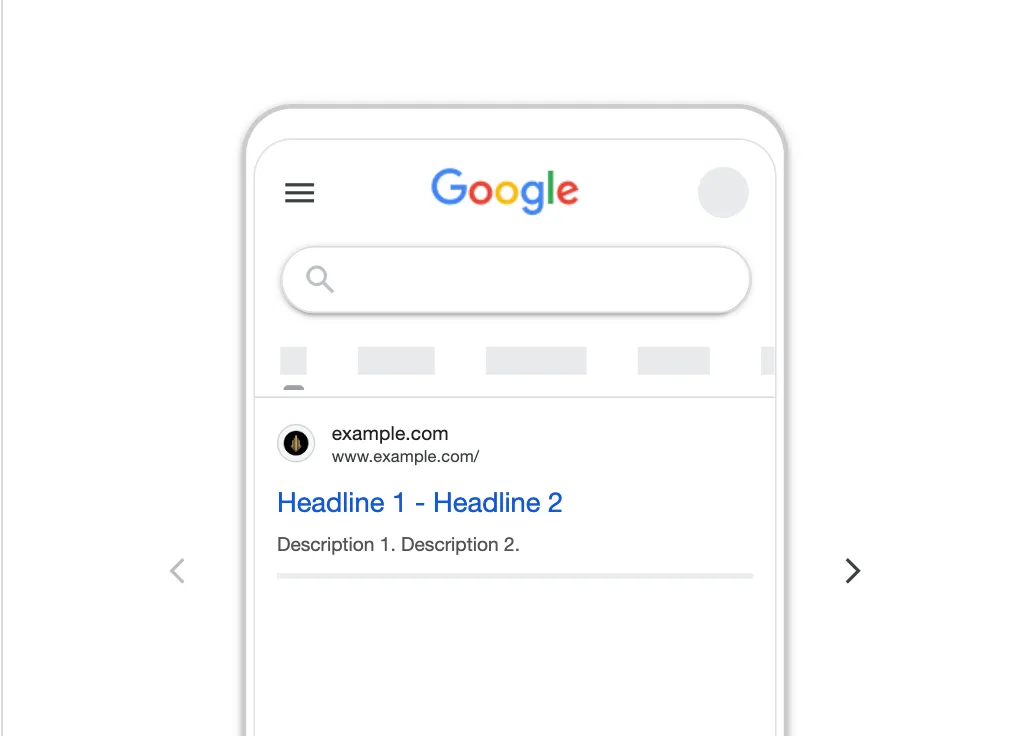
Your ad is your first impression. It needs to stop the scroll and convince someone to click instead of your competitors.
Headlines follow a proven formula: location + benefit + differentiator.
Your first headline should include the keyword you're targeting. If someone searches "houses for sale in Austin," your headline should contain exactly that phrase.
Headlines two and three should be benefit-driven to entice clicks. Mention something unique about you that builds credibility. Use specific numbers instead of vague claims. "Sold 47 homes in Westlake in 2024" beats "Experienced local agent" every time.
Pro tip: Use specificity in your ads to reduce wasted spend. If you specialize in luxury homes, say "Luxury homes starting at $800K." This sets expectations before the click and filters out people looking for starter homes.
Descriptions expand on your headlines. Use similar strategies but in full sentences. Include numbers, emotional triggers, and credibility markers that encourage action.
Also Include relevant URLs to the ad you're creating. If you're targeting homes for sale in Toronto, you should link to your homes for sale in Toronto page. DON'T send traffic to your home page (unless you're targeting keywords like "real estate agent in Toronto").
Critical reminders:
Your ad copy should actually repel the wrong clicks. If you don't work with investors, don't pretend you do just to get clicks. You'll pay for traffic that never converts.
Maintain absolute consistency from keyword to ad to landing page. If your keyword is "condos in downtown Seattle," your ad should mention condos in downtown Seattle, and your landing page should show condos in downtown Seattle. Any disconnect kills conversions.
7. Set Your Budget
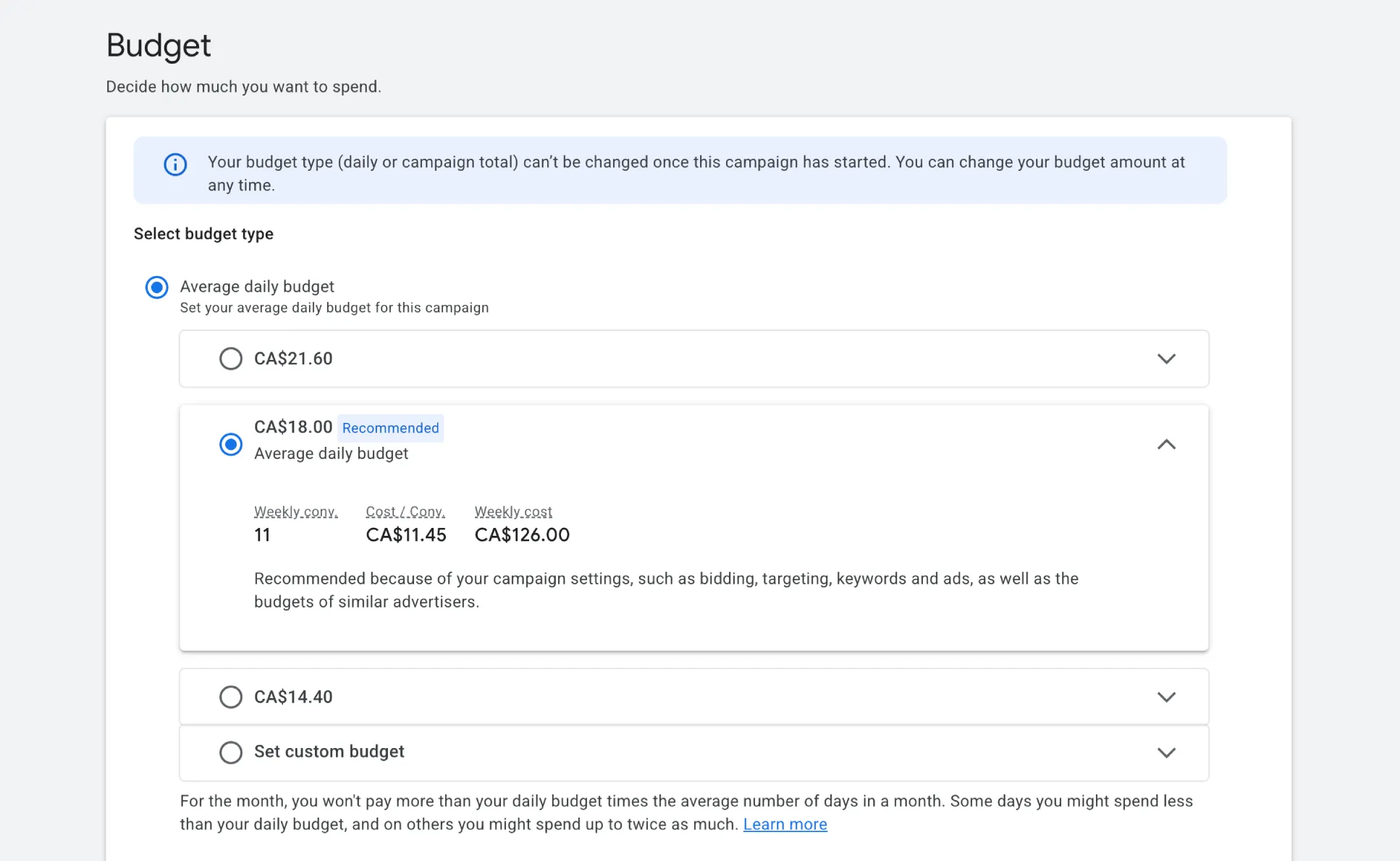
Budget requirements vary dramatically based on your keywords. As a general rule, if a keyword has a cost-per-click of $3, you want to spend at least $30 per day to generate enough clicks (at least 10 clicks per day) for Google to optimize effectively.
Google provides suggested budgets based on what other advertisers spend on similar keywords. You can use these as a starting point or go lower to test results before scaling.
There are nuances to budget optimization that take experience to master. Do your research and start conservatively.
8. Launch and Monitor
Before you hit the launch button, review everything. Double-check your targeting, verify your conversion tracking is working, and make sure your landing pages are live.
Once you launch, resist the urge to make immediate changes. Give your campaigns at least a few days to gather data.
9. Optimize and Scale Your Campaigns
The work doesn't stop at launch. Ongoing optimization separates profitable campaigns from money pits.
Add negative keywords religiously. Even with exact match keywords, Google sometimes shows your ads for related but irrelevant searches. When you spot searches that triggered your ad but have no chance of converting, add them as negative keywords. This protects your budget from waste.
Analyze your performance metrics regularly. Focus on impressions, clicks, click-through rate (CTR), and cost.
Here's how to interpret what you're seeing:
Very low impressions with no clicks usually means you're targeting a keyword with minimal search volume. Turn off the ad and reallocate that budget.
Some impressions with some clicks is inconclusive. Your ad might be resonating, but you need more data. Let it run for a few more days to accumulate impressions before making a decision.
High impressions with low or no clicks indicates your ad isn't compelling enough. The keyword has search volume, but your headline and description aren't convincing people to click. Rewrite your ad copy.
High impressions with high clicks is a positive signal. Your ad is resonating with searchers.
High clicks with few inquiries means something is wrong with your landing page. Possibilities include inconsistency between your ad and page, poor design, slow loading time, or unclear calls to action. Fix your landing page.
High clicks with high inquiries means your ad is performing well. Now you can decide whether to maintain your current spend or scale gradually. If scaling, increase your budget by only 10-20% every two to three days. Scaling too aggressively can disrupt Google's optimization and hurt performance.
You can also expand to new locations with new ad groups and scale horizontally rather than just increasing budgets on existing campaigns.
Common Mistakes That Kill Campaigns
Learn from others' failures. These mistakes destroy profitability:
Sending all traffic to your homepage instead of dedicated landing pages optimized for specific searches.
Not tracking phone calls as conversions. Many real estate leads come through phone calls. If you're not tracking these, you're missing half the picture.
Running ads without a conversion-optimized website. You can't fix a fundamentally broken website with better ad copy.
Constantly changing things during the learning phase. Every time you make a significant change, you reset Google's learning process. Be patient and let the algorithm work.
Using budgets that are too low. You need enough spend to generate meaningful data. Trying to run real estate ads on $10 a day won't work.
Scaling too fast. Doubling your budget overnight because you got three good leads rarely works out. Scale methodically.
Setting and forgetting campaigns. Google Ads requires ongoing management. Markets change, competition shifts, and performance fluctuates. Check in regularly.
Moving Forward
A successful real estate Google Ads strategy starts with a professional, conversion-optimized website. Everything else builds on this foundation. Without it, even the best ads will fail.
Think of Google Ads as a system requiring continuous testing and optimization. It's not a set-it-and-forget-it tool that runs itself. You're constantly learning what works in your market, refining your approach, and improving results.
The agents who succeed with Google Ads are those who start small, test methodically, and scale based on data rather than hope. They understand their numbers, know their cost per lead, and can confidently invest more because they've proven the system works.
If you're ready to generate consistent, high-quality leads through Google Ads, start with one well-researched campaign targeting a specific area and property type. Master that before expanding. Build your foundation properly, and you'll have a lead generation machine.