

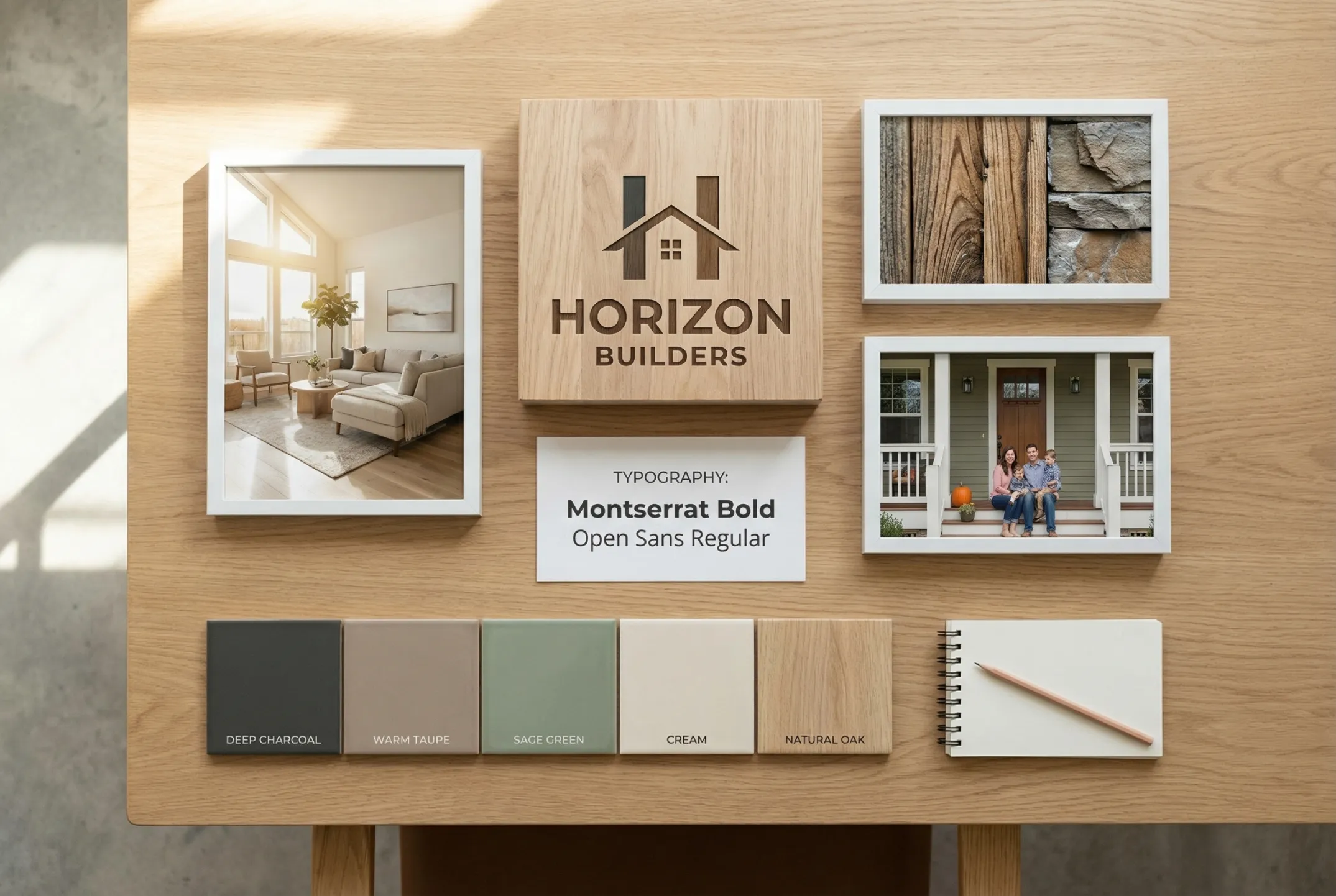
The home building industry is more competitive than ever. Buyers today have countless options, and they're doing their homework before reaching out to any builder.
They're scrolling through websites, reading reviews, comparing portfolios, and forming opinions about your company long before they pick up the phone.
This creates both a challenge and an opportunity.
The challenge?
Standing out in a market where many builders offer similar floor plans and features.
A strong brand can make you the obvious choice.
This guide walks you through the complete branding process specifically designed for home building companies.
You'll learn exactly what branding means for your business, why it matters more than you might think, and how to build a brand that attracts the right customers and commands premium pricing.
What Is Home Builder Branding?
When most people think of branding, they picture a logo. But your brand is so much more than that.
Your brand is the complete identity and reputation of your home building company. It's what people think and feel when they hear your company name. It's the promise you make to every customer and the experience you deliver.
Branding is who you are, while marketing is how you communicate that identity. You need both, but branding comes first. After all, you can't effectively market a company that hasn't figured out its identity.
Why Is Home Builder Branding Important?
You might be wondering if branding really matters when you build quality homes.
The answer is a resounding yes.
Here's why a strong home builder branding strategy delivers real business results:
- Creates Differentiation
In most markets, multiple builders offer similar square footage, comparable features, and overlapping price points. Without clear branding, you become interchangeable. - Builds Trust and Credibility
Buying a home is one of the biggest decisions your customers will ever make. They need to trust that you'll deliver on your promises, handle problems professionally, and stand behind your work for years to come. - Commands Premium Pricing
Well-branded builders regularly charge more than their competitors for similar homes. Why? Because buyers perceive higher value. - Attracts Ideal Customers
Clear branding helps you connect with the right buyers. If you specialize in modern, sustainable homes, your branding should attract environmentally conscious buyers who value innovative design. If you focus on traditional craftsmanship, your brand should appeal to buyers who appreciate timeless quality. - Supports Word-of-Mouth Referrals
People recommend brands they remember and believe in. When your branding is strong and memorable, past customers can easily describe what makes you special to their friends and family. - Increases Company Value
If you ever decide to sell your business, brand equity is a tangible asset. Buyers will pay more for a company with a recognized brand, loyal customer base, and clear market position. - Creates Employee Pride
Your team wants to work for a company they're proud of. Strong branding helps you recruit quality craftspeople, talented designers, and skilled salespeople. It also helps you retain them because they feel good about representing your company.
How To Create A Home Builder Brand
Creating a home builder brand isn't guesswork. It's a systematic process that moves through five key phases.
Depending on your company's size and existing materials, this process typically takes 6 to 8 weeks to complete properly.
Rushing through these steps might save time in the short term, but it almost always creates problems later. You'll end up with a brand that doesn't resonate with your target audience or that you'll need to redo in a year or two.
1. Research
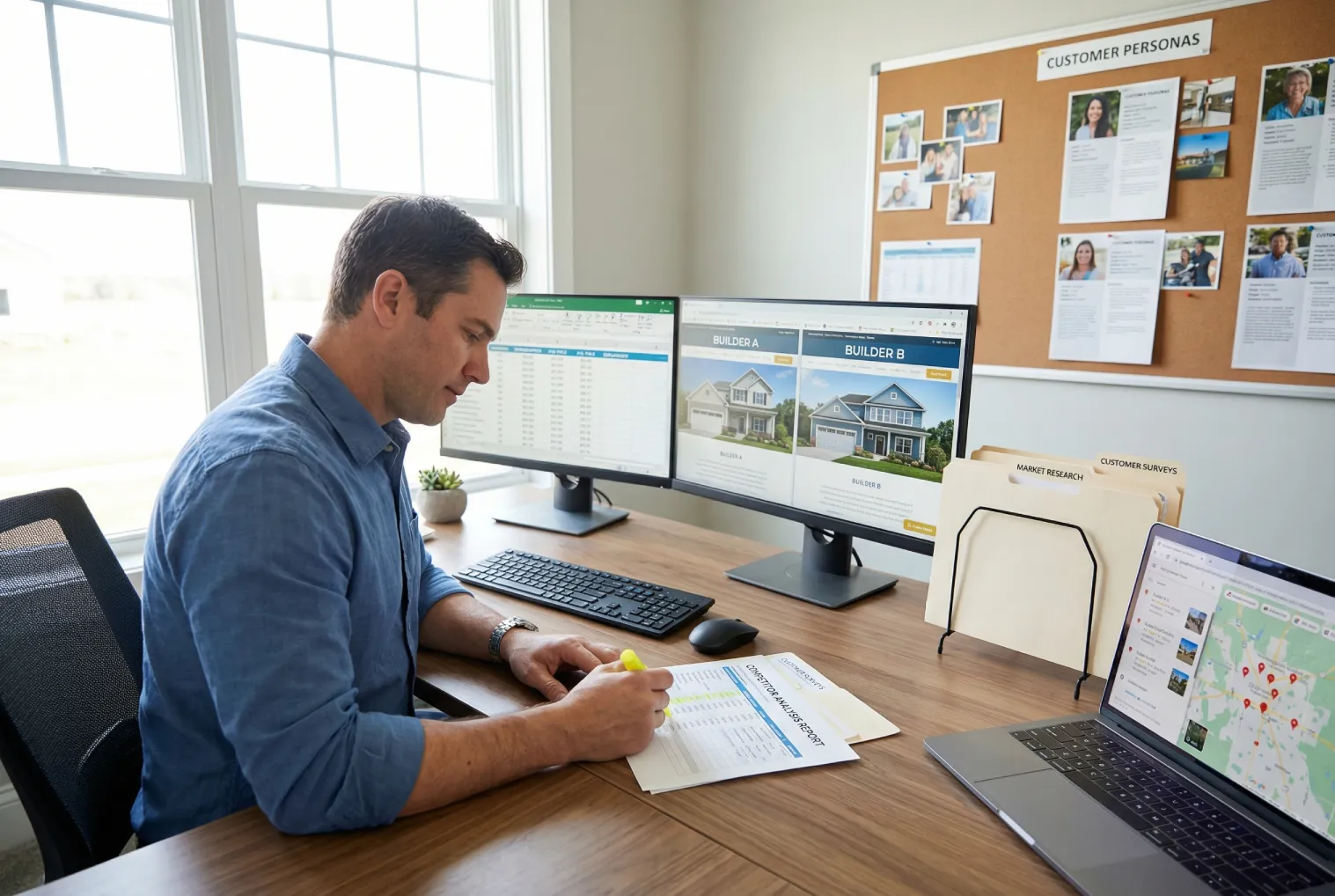
Before you make any branding decisions, you need to understand where you stand today and what your market looks like. This research phase sets the foundation for everything that follows.
Analyze your current position. If you have existing brand elements, review them honestly. What's working? What feels outdated? Look at customer feedback, online reviews, and any market research you have. How do people currently perceive your company?
Study your target audience. You can't build a brand that resonates with everyone, and trying to do so creates bland, forgettable branding. Instead, get specific about who you're trying to reach.
Start with demographics:
- What age range typically buys your homes?
- What income levels?
- Are they first-time buyers or move-up buyers?
- Are they families with children, empty nesters, or young professionals?
- Where do they prefer to live?
Then dig into psychographics, which are often more revealing than demographics.
- What lifestyle do they aspire to?
- What values guide their decisions?
- Are they motivated by luxury, value, sustainability, family connection, or something else entirely?
Finally, map their buyer journey.
- How do they research builders?
- What influences their decisions?
- What concerns keep them up at night?
Understanding their pain points helps you position your brand as the solution they've been looking for.
Conduct competitive analysis. Identify 5 to 10 direct competitors in your market. Study their branding carefully.
- What visual identities do they use?
- What messages do they emphasize?
- How do they position themselves?
- What are their strengths and weaknesses?
Look for gaps and opportunities. Maybe every competitor emphasizes speed and efficiency, but your buyers actually value craftsmanship and attention to detail. Maybe everyone focuses on first-time buyers, leaving move-up buyers underserved.
These gaps become your opportunities to differentiate.
Complete an internal assessment. Step back and honestly evaluate what makes your company unique. This might be your:
- craftsmanship approach,
- exceptional customer service,
- innovative design philosophy,
- deep local expertise,
- or something else entirely.
What are your company's core values and mission? What strengths does your team bring to every project?
The answers to these questions should drive your brand strategy, because authentic branding starts with who you actually are.
Research market trends. Stay current on home design trends, buyer preferences, and industry innovations. This doesn't mean you should chase every trend, but understanding the landscape helps you make informed positioning decisions.

2. Brand Strategy
With research complete, you're ready to develop your brand strategy. This is where you transform insights into actionable direction.
Your brand strategy includes five essential elements:
- Brand positioning defines where you sit in the market relative to competitors. Are you the luxury builder, the value-conscious option, the eco-friendly choice, the custom specialist, or something else? Your positioning should be specific, relevant to your target audience, and defensible based on your actual capabilities.
- Unique value proposition articulates what you offer that others don't. This isn't just "quality homes" because everyone claims quality. It might be "architect-designed modern homes with sustainable materials and transparent pricing" or "custom craftsman builds with dedicated project managers and lifetime warranties." Make it specific and meaningful.
- Brand story explains why your company exists beyond making money. Maybe you started the business because you were frustrated with impersonal production builders. Maybe you saw a need for sustainable building in your community. Maybe you grew up in construction and wanted to honor traditional craftsmanship. Your story creates emotional connection.
- Brand mission states what you aim to do for your customers. This should be customer-focused, not company-focused. "To help families create their dream homes through transparent communication and exceptional craftsmanship" is better than "To be the leading builder in our market."
- Brand vision describes what success looks like in the future. Where do you see your company in 5 or 10 years? What impact do you want to have on your community? This gives your team something to work toward.
3. Visual Identity
Now comes the fun part.
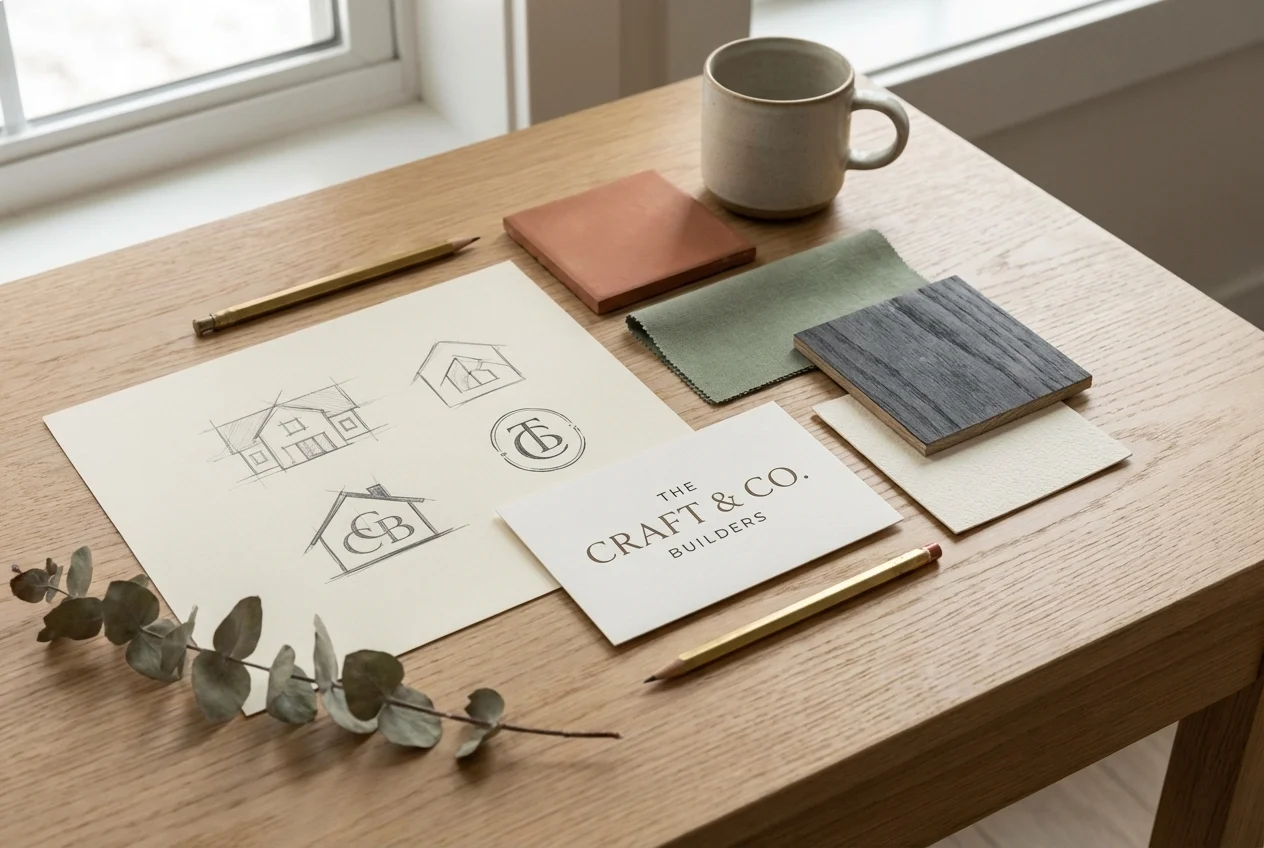
Your visual identity brings your brand strategy to life through design elements people can see and recognize.
Logo Design
Logo design should reflect your brand positioning and personality. A modern, minimalist builder needs a very different logo than a traditional craftsman builder. Your logo must work across all applications, from large job site signs to tiny social media profile pictures.
You'll want a primary logo plus alternative versions. This might include horizontal and stacked layouts, plus an icon-only version for tight spaces. Make sure each version maintains the essence of your brand.
Colors
Color palette creates instant visual recognition. Choose 1 to 3 primary brand colors that will appear most often, plus secondary colors for flexibility.
Consider color psychology:
- Blues convey trust and professionalism
- Greens suggest sustainability and growth
- Earth tones communicate warmth and home
Your colors should work well in the home building context, meaning they look good on construction sites, in model homes, and on building materials.
Typography
Typography includes your fonts for headlines and body text. Choose fonts that reflect your brand personality. Modern brands might use clean sans-serif fonts. Traditional brands might incorporate classic serifs.
Whatever you choose, make sure it's readable across both digital and print applications.
Brand Patterns/Graphics
Brand patterns and graphics include supporting visual elements like lines, shapes, or textures that reinforce your brand. You'll also want to define your photography style.
Will you use bright, airy images or warm, cozy ones? Staged interiors or lifestyle shots showing families in homes?
Establish your iconography style too. If you use icons on your website or marketing materials, they should all share a consistent visual approach.
Brand Guidelines
Guidelines prevent your brand from being used incorrectly. Document how to use your logo on different backgrounds, what spacing and sizing requirements to follow, and what common mistakes to avoid. These guidelines keep your brand looking professional across every touchpoint.
Style Guide
Create a brand style guide that documents all these visual standards in one place. This becomes your brand bible, ensuring consistency even as new team members join or contractors create materials on your behalf.
4. Publish Your Brand
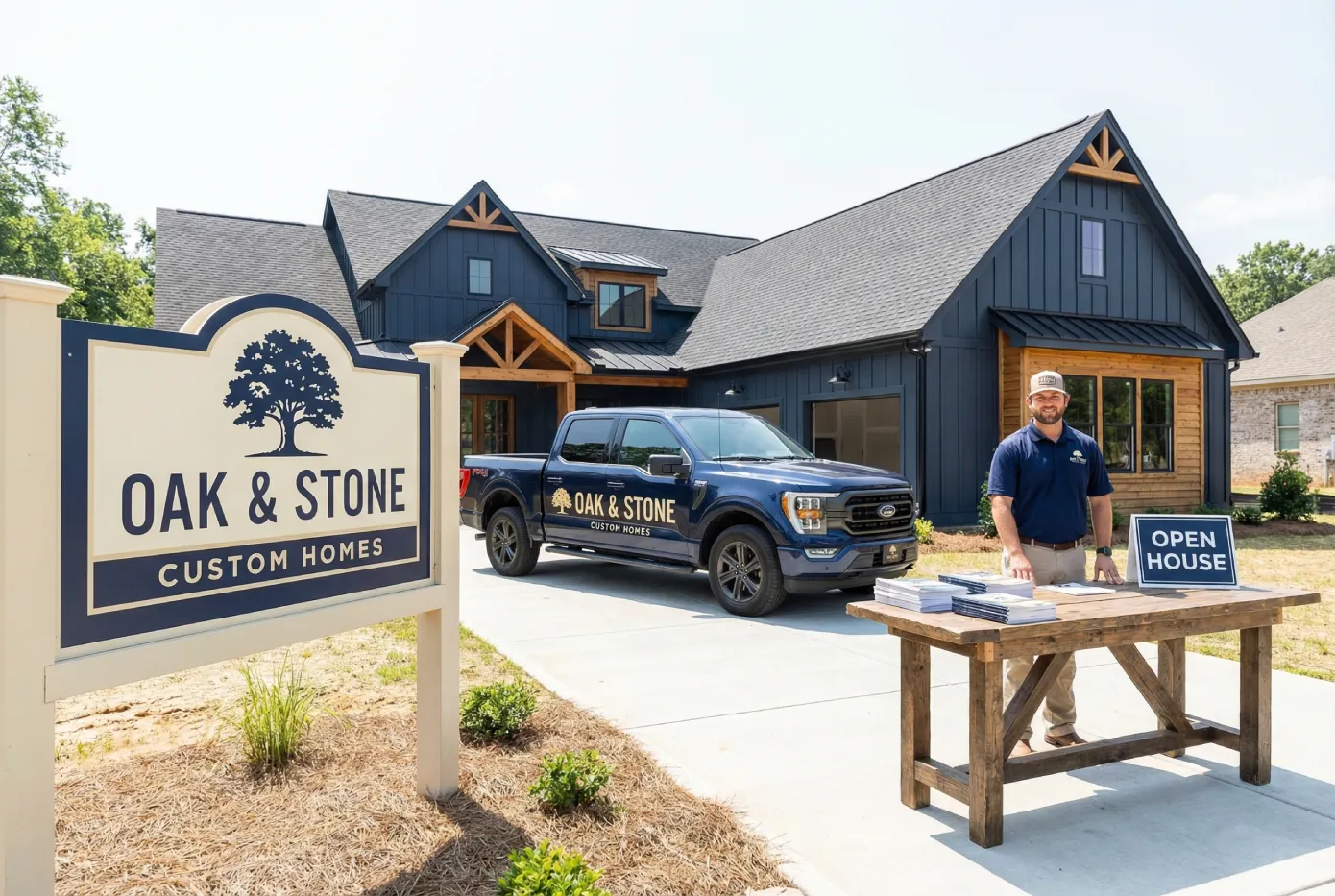
Creating your brand is only half the battle. Now you need to implement it consistently across every touchpoint where customers encounter your company.
Digital touchpoints include:
- Your website, which is often the first impression you make
- Social media profiles and posts
- Email signatures and newsletters
- Online directory listings
- Digital advertising
Physical touchpoints include:
- Brochures, flyers, and sales materials
- Business cards
- Vehicle wraps and signage
- Your company office and model homes
- Job site signs and banners
Internal Rollout
Internal rollout is often overlooked but critically important. Train your team members on your brand standards. Make sure everyone understands not just what the brand looks like, but what it means and why it matters.
Provide brand assets and guidelines to employees and contractors so they can represent your brand correctly. Create internal excitement about the new brand so your team becomes enthusiastic ambassadors.
Launch Announcement
Launch announcement makes your new brand public. Send an email to existing customers and prospects explaining the change. Make a social media announcement showing off your new look. If you're doing a significant rebrand, consider a press release or launch event.
The key is making this feel like an exciting evolution, not a desperate makeover.
5. Monitor Your Brand
Your brand isn't a "set it and forget it" project.
Ongoing monitoring ensures it stays strong, consistent, and relevant.
Track brand awareness through metrics like:
- Website traffic and engagement
- Social media followers and interaction rates
- Mentions of your brand online
- Direct traffic to your website (which shows people typing in your URL because they remember you)
Measure brand perception through customer surveys and feedback, online reviews and ratings, and social media sentiment. Are people saying what you want them to say about your company?
Monitor consistency by conducting regular audits of all your touchpoints. Do your business cards match your website? Are contractors using old logos? Are your job site signs following brand guidelines?
Inconsistency dilutes your brand.
Protect your brand by considering trademark registration for your logo and company name. Monitor for unauthorized use of your brand elements. Address misrepresentation promptly and professionally.
Common Home Builder Branding Mistakes
Knowing what to avoid is just as important as knowing what to do. Here are the most common branding mistakes home builders make:
- Copying competitors creates "me too" branding that makes you forgettable. If you look and sound like everyone else, buyers have no reason to choose you specifically.
- Inconsistent application means using different colors, fonts, or messages across channels. One day your website is professional and polished. The next day your Facebook post looks like it came from a different company.
- Focusing only on price undermines brand value and profitability. When price is your only differentiator, you attract customers who will leave for a competitor offering $500 less.
- Ignoring visual quality shows up as poor photography, outdated design, or amateur graphics. Remember, buyers are making a decision worth hundreds of thousands of dollars. They expect your brand to look as professional as that investment deserves.
- Being too generic means using vague messaging like "quality homes" or "building dreams" that could apply to literally any builder. Specific positioning is memorable. Generic positioning is invisible.
- Neglecting the customer experience happens when you think brand is just visual. Every interaction matters. From how quickly you return phone calls to how clean you keep job sites to how you handle warranty requests.
- Skipping research leads to branding based on personal preference rather than market data. What you like doesn't matter nearly as much as what resonates with your target customers.
- Trying to appeal to everyone creates diluted messaging that doesn't speak strongly to anyone. You can't be everything to everyone, and attempting to do so makes you nothing to anyone.
- Set it and forget it means launching your brand but never maintaining or monitoring consistency. Your brand needs ongoing care and attention.
- Rushing the process produces quick, cheap branding solutions that look unprofessional and fail to differentiate you.
- Not getting professional help when you need it leads to DIY branding that doesn't match the investment your customers are making. Would you trust a builder who DIY'd their website with a free template? Your customers feel the same way about amateur branding.
Conclusion
A strong home builder branding strategy is essential for success in today's competitive market.
Buyers have more choices than ever, and they're making decisions based on more than just floor plans and price points. Your brand is what sets you apart, builds trust, and gives customers confidence in choosing you.
Remember that branding is a strategic process requiring research, planning, and consistent execution. The five phases work together as a complete system:
- Research gives you insights
- Strategy transforms those insights into direction
- Visual identity makes that direction visible
- Publishing puts your brand into the world
- Monitoring keeps it strong over time
The investment you make in your home builder branding strategy pays dividends through premium pricing, easier sales, stronger referrals, and higher company value. Most importantly, it creates a business you and your team can be genuinely proud of.
If you need professional help developing your home builder branding strategy, we're here to guide you through the process.